A Closer Look at Findings from the Federal Investigation Into PGCPS’s Head Start Program

by Genevieve Demos Kelley and Amy Alford

Federal funding has been withdrawn from the Prince George’s County Public Schools Head Start program, after PGCPS failed to correct problems identified in a federal investigation conducted in February. The school system has been cited for failing to “report instances of child abuse and neglect to Federal, State, and local authorities as required by applicable laws; therefore, putting children at significant risk for mistreatment and abuse’ (see “Overview of Findings,” p. 4).

The federal Office of Head Start sent a letter to Board of Education Chair Segun Eubanks, outlining findings that point to failure failure at several levels of organization within the school system.

Failure to Report Use of Humiliation as Punishment

  • On December 17, 2015, a teacher at H. Winship Wheatley Early Childhood Center forced a 3-year-old child to mop up his own urine, while still wearing his wet clothing. The teacher used her personal cell phone to take photos of the child, and sent them to the child’s mother, including the text abbreviation “LOL,” along with a description of the incident.
  • The child’s parent was upset about the matter and on December 22, she spoke to the Family Services Worker (FSW), a PGCPS employee assigned to family-based case management. The FSW “likely discouraged the parent from making a report at the time, as she told the parent she would have to report it as a mandatory reporter” (see “Overview of Findings,” p. 3).
  • Several weeks later, on January 12, the parent did make a report to the FSW. However, there is no record that the FSW immediately reported the incident to the Maryland Department of Human Resources Child Protective Services (CPS). Maryland law requires that educators make an immediate report of suspected abuse by telephone, and a written report within 48 hours of the telephone contact.
  • The Regional Office of Head Start learned of the incident when the child’s parent notified the office, via telephone, on February 5.
  • The Program Supervisor of PGCPS’s Head Start program did provide some documentation, including a timeline, to the Regional Office of Head Start on February 10. However, PGCPS refused to provide additional documentation after multiple requests were made. This “limit[ed] the Administration for Children and Family’s ability to perform its oversight responsibilities to ensure Federal requirements were met and children were provided safe and secure environments” (see “Overview of Findings,” p. 4)
  • Though the child was forced to mop his urine in an open area of the classroom, two assistant teachers claimed that they did not witness the incident.

Failure to Ensure Teachers Maintained Confidentiality

  • It was reported that teachers in the Head Start Program and regular volunteers in the school system took inappropriate photographs of children (see “Overview of Findings,” p. 5).
  • The Regional Office requested that PGCPS provide its policies and procedures regarding taking photographs of children in the Head Start program. PGCPS refused.

Failure to Ensure that Teachers Use Positive Methods of Discipline

  • On June 9, 2016, two children in the Head Start Program at James Ryder Randall Elementary School were forced by a teacher and an assistant teacher to stand in the classroom holding objects above their heads. According to the report, “The first child was crying and calling the teacher’s name, and the teacher yelled at the child and instructed her to continue holding the object. The second child accidentally dropped the object and was also yelled at and instructed to continue to hold the object (see”Overview of Findings,” p. 7).

Failure to Ensure that No Child is Left Unsupervised

  • On June 9, 2016, a five-year-old child walked home after being left unsupervised during school hours. The child had been released from the nurse’s office and told to return to her classroom, but the class was at the playground. Not being able to find her class, the child returned to the nurse’s office and was unable to open the door. She left the building and walked home (see “Overview of Findings,” p. 8).
  • This incident was reported to the Regional Office on the same day by the PGCPS Head Start Director.

Read more:

Read the entire letter from the Office of Head Start to Board Chair Segun Eubanks, as well as the enclosed report, below.

Continue reading

A Teacher’s Perspective on the Junior Achievement Finance Park

by Natalie Barnes

IMG_7453When I first heard that all eighth graders would be participating in the Junior Achievement Finance Park curriculum, I was not looking forward to the experience. I assumed that it would be just one more thing to try to fit into the already jam-packed school year. However, in the end, I was delighted by the experience and look forward to participating in the future.
I attended a training at the beginning of the 2015-2016 school year that shared highlights of the curriculum and took us on a tour of the location. I was still a bit confused, but the coordinators promised that once we looked at our curriculum guides, it would make much more sense. And they were right. The curriculum guide was well put-together, with color-coded organization, clear instructions, and detailed explanations. It also provided teaching suggestions, extension activities, and probing questions. The county required that we only cover a few lessons (shared between social studies and math class), which were mandatory material for the experience. However, there was a plethora of additional material for students who needed differentiation or teachers who had more time to further explore the content. Overall, the curriculum took approximately a week in math class and a week in social studies, although teachers were free to customize this for their classes as long as they met the minimum lesson requirements.

Each student had his or her own workbook.  These were consumable workbooks that were designed to be engaging to students with various graphics as well as plenty of activities and space to work—all in full color.

The fourteen required lessons covered four main topics:

  • Income
  • Saving, Investing, and Risk Management
  • Debit and Credit
  • Budget

Income and Budget were covered in math classes while the remaining topics were taught in social studies classes. While many situations were geared to future careers and salaries, students also spent a great deal of time analyzing situations and jobs that are common for middle and high school students. Many of my students were engaged as they examined current and future potential situations, applying the principles of financial literacy to their own lives. This became even more true as we prepared to attend the Financial Park.

The entire field trip was free of charge to students, ensuring that every student could come. The buses were prompt and because they were not school buses, students were excited to attend, and they felt like this was a special experience. When we arrived, they were ushered into the Financial Park auditorium to receive a brief overview of the day’s activities. But after only a few moments, they were split into groups and assigned a volunteer who would serve as their group leader for the day. Many of the volunteers were teachers, parents, student teachers, or community members. The students were often pleased to be working with an adult they knew. It was particularly advantageous to some of our students with learning disabilities or other special needs as they were able to be placed with supportive chaperones who allowed them to participate fully. We had a group who spoke very little English, which was assigned to a chaperone who also spoke Spanish, allowing the day to be conducted bilingually, truly allowing all the students to engage with the activities.

As they were assigned groups, each student received an iPad and a fictional scenario about their job, salary, marital status, and family situation. From there, they determined their monthly gross income and monthly net income, using the iPad. On the iPad, they then set a budget, allotting money for housing, transportation, utilities, food, clothing, entertainment, etc. During the budgeting time, they explored the Finance Park, which has various stations devoted to each of these categories, allowing students to research costs before making a final decision. After lunch, students then revisited each of these stations and actually “purchased” items. They had to first decide on renting an apartment or buying a house and then owning a car or using public transportation. Many times they had frustrating realizations that they simply could not afford the home or car of their dreams and had to settle for less expensive options. Once they had determined their housing and transportation options, students were then given a “debit card” linked to their iPad and account. They went shopping to the various stations around the Finance Park, buying different products and quickly realizing that their money supply was not endless. After their purchasing time was up, they worked through reflection activities with their chaperone and made any final changes to their monthly spending. One aspect of the reflection included a random event that caused them to spend money (e.g. the car needed repairs, the refrigerator stopped working, a child broke her arm).

Continue reading

“After School Satan” Club May Come to PGCPS School

by Genevieve Demos Kelley

The Washington Post reports that The Satanic Temple has a new extracurricular program dubbed the “After School Satan Club,” with plans to introduce clubs at nine schools across the country, according to the program’s website. Prince George’s County’s Bradbury Heights Elementary School, in Capitol Heights, is on the list.

The club’s name is misleading. The Satanic Temple does not advocate the worship of Satan—or any other supernatural being. Its stated mission is “to encourage benevolence and empathy among all people. In addition, we embrace practical common sense and justice.” The After School Satan Clubs will encourage “a scientific, rationalist, non-superstitious world view.”

The After School Satan Clubs aim to provide a contrasting voice to the Christian message of the Good News Clubs, an evangelical ministry that organizes after-school clubs run by volunteers. According to the After School Satan Club’s website, “[o]nce religion invades schools, as The Good News Clubs have, The Satanic Temple will fight to ensure that plurality and true religious liberty are respected.”

Parent permission is required to attend either the After School Satan Club or the Good News Club.

Continue reading

Tulip Grove Renovation More Than Two Years Behind Schedule

by Lori Morrow

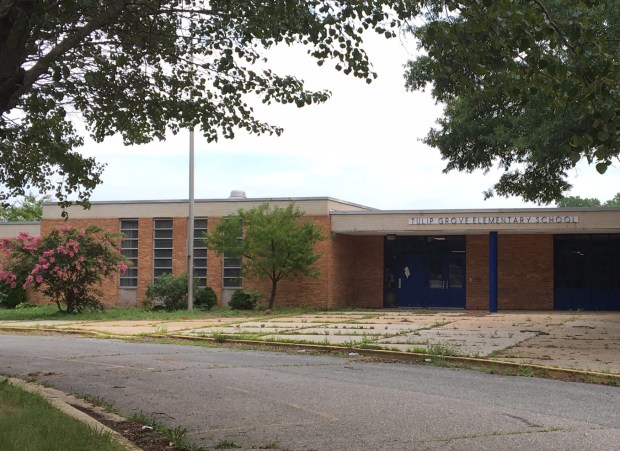
IMG_8106 (1)June 20th , 2016 was my daughter’s last day at Tulip Grove Elementary School, and it was a bittersweet farewell. Tulip Grove students and staff were originally scheduled to return to a newly renovated building this summer. However, the Tulip Grove community is still waiting for construction to begin, though state funding was approved two years ago.

September 2012: The updated Parsons Report (or Facility Conditions Assessment) identified Tulip Grove Elementary School as one of three schools with a Facility Condition Index value greater than 75%, indicating the need for major repairs and renovation. (The Facility Condition Index is the ratio of the cost of repairs to the cost of replacement.) Tulip Grove had previously been identified as one of nine schools recommended for replacement in the May 2008 Facility Condition Assessment Study.

2011-2013: Meetings about educational specifications and designs took place over this two-year period. Ultimately plans for a major renovation and addition were approved, adding approximately 15,000 sq. ft to the current facility to meet newer school standards while maintaining the State Rated Capacity of 411 students.

October 2012: Funding Request was submitted for FY2014 funds

November 2013: Presentation slides from GWWO Architects, Inc. listed the following timeline:

  • Design Development (DD) Submission: Oct. 11, 2013
  • Construction Document (CD) Phase: October 2013-February 2014
  • Permit Submission: March 2014
  • Bid Phase: April 2014-June 2014
  • Construction: July 2014-December 2015

December 2013: Parents were invited to a preliminary community meeting with the PGCPS Capital Improvement Program (CIP) team to discuss swing space where children would be housed during the construction period. Initial options of transporting children to vacant PGCPS facilities at Berkshire Elementary or Middleton Valley Elementary were not received well as these schools are 19-21 miles from Tulip Grove Elementary School.

February 2014: The CIP Team returned for a second community meeting to discuss swing space. Most community members expressed a desire to find a location in the greater Bowie area. (Meeting summarized in City of Bowie memorandum)

March 2014: Swing space was still undecided although parents had been actively engaging with the PGCPS Board of Education since the February meeting. (See this story in the Gazette, and this story in the Capital Gazette Bowie Blade, both from March 2014.)

April 2, 2014: The Parent Teacher Association (PTA) President was notified that Prince George’s County would allow Tulip Grove to use the Meadowbrook facility, which had been the site of an elementary school that closed in 1981, as swing space.

June – August 2014: The Meadowbrook facility was renovated and prepared for use as a school again.

August 2014: Students began the 2014-15 school year at “Tulip Grove @Meadowbrook”. Because the school site was across a major road from the school boundary area, all Tulip Grove students are now eligible for bus transportation, increasing the number of bus routes from two to seven.

Fall 2014-Winter 2015: There was minimal communication from the CIP Team to the PTA regarding construction updates. Neighbors around Tulip Grove could see that little had changed at the old school site. Per the timelines provided by PGCPS staff, the project was behind schedule before students began the 2014-15 school year, but that information was not communicated to parents.

Continue reading

Proposed Policy Update to Require Training for Parent Volunteers

Lori Morrow presented a version of this testimony during the public comment portion of the May 12th Board of Education Meeting. The views expressed are the author’s own and do not necessarily reflect the views of Prince George’s County Advocates for Better Schools.

by Lori Morrow

I would like to share my thoughts on the volunteer policies on the agenda tonight. I am glad to see that the administrative policies about volunteers will be updated, as there were certainly some gray areas and inconsistent implementation in Administrative Procedures for Volunteers and Criminal Background Checks.

However, as I read the updated language for Board Policy 0106, I’m concerned some of these new procedures have the potential to create barriers for parents who are interested in volunteering. In particular, I believe that, while “Requiring all volunteers and leadership of Parent Teacher Associations and Parent Teacher Organizations to undergo specific training on reporting suspected child abuse and neglect” is an understandable reaction to incidents this year, depending on the form that training takes, it is yet another requirement we’re levying on volunteers that could result in diminished volunteerism.

I am a former Elementary School PTA President, and incoming Middle School PTSO President and I know how difficult it can be to engage parents and recruit them as volunteers. It is my hope that parent leaders and advocates will be included in your process as you establish volunteer training and monitoring procedures. Parents, grandparents and community members who choose to provide free labor in our schools should be treated as welcomed partners, not suspects. We accept the locked doors and Raptor checks and the sign-in procedures, but we also want reassurance that volunteers are welcome and needed.

In my personal experience, I think we lost some of that welcome feeling both when Parent Liaison positions were eliminated in the budget cuts years ago, and also as security measures have increased in recent years. If parents, school staff, and the administration work together, I believe we can find a balance between the transparent, welcoming atmosphere parents and volunteers appreciate, while still maintaining the safe learning environment our students deserve.

Continue reading

Party Politics, Exhibit A: Sample Ballots

by Genevieve Demos Kelley

2016 sample ballot mailer2

Last week, I eagerly listened to a segment on Kojo Nnamdi’s WAMU radio show that addressed our politicized school board elections. David Cahn, Co-Chair of Citizens for an Elected Board, and Cheryl Landis, District 5 Board of Education Candidate and Chair of the Democratic Central Committee for Prince George’s County were guests on the show.

At one point, Mr. Nnamdi seemed to understate—or even misstate—the concern that so many of us have about partisan meddling in our school board elections. Speaking to Cheryl Landis, Mr. Nnamdi said, “Mr. Cahn and presumably others are concerned that you make it clear in some of your campaigning that you are a Democrat.”

If Mr. Nnamdi thinks that simply stating one’s party affiliation sums up the problem with partisan campaigns for school board, he is sadly missing the point.

Among the campaign literature for April’s primary election was a mailer sent to District 5 residents touting County Executive Baker’s endorsed candidates. Note the “sample ballot” on page 2 (pictured above), with the banner at the top reading, “2016 Democratic Primary Sample Ballot, Take this with you when you vote.” Names of the preferred candidates are highlighted; names of the other candidates are printed so lightly that only those with sharp eyesight can read them.

When a school board candidate is presented on a sample ballot as the preferred choice (or, in this case, the only choice) of party leaders, it is nearly impossible for any other candidate to prevail. This is the kind of partisan meddling that has led many county residents to conclude that party leaders are stacking the board with hand-selected members, members who owe them their loyalty.


Should the Democratic Central Committee Endorse School Board Candidates?

Tommi Makila wrote the following letter urging the Democratic Central Committee not to endorse specific Board of Education candidates in the upcoming elections.

July 17, 2016

TO: Prince George’s County Democratic Central Committee

RE: Board of Education election endorsements

Dear Central Committee Members:

I am a Democratic community activist who is closely involved in the Prince George’s County Public Schools. I have served on the PTSA board of my child’s school for five years. I have also served for two years as the legislative chair of the Prince George’s County PTA Council, and during that time I have also served on the Maryland PTA legislative committee. I am a member of Prince George’s County Advocates for Better Schools and a founding member of the Alliance for Nonpartisan School Board Elections. I am writing this letter, however, as a concerned parent and individual community activist.

I am writing to you to urge that the Democratic Central Committee not make any endorsements in the November 2016 Prince George’s County Board of Education elections. As the Central Committee makes its decision about potential endorsements in BOE races, I would like you to keep the following issues in mind:

1. By Maryland law, school board elections are to be nonpartisan. I have a hard time coming up with anything else that could be as much against the spirit of this law than the central committee of one of the major parties making endorsements in these races.

2. In a down ballot race such as a BOE election, a Democratic Central Committee endorsement and its accompanying significant financial benefit in the form of the Democratic sample ballot is nearly certain to be decisive. In a down ballot race, it is virtually impossible for any opponent to garner enough financial resources to match the Democratic Party resources. I want us voters to decide the race based on the ideas the candidates present to us. I don’t want the Central Committee with its significant financial resources to make the decision for us voters.

Continue reading

Prince George’s Schools Advocate on Kojo Nnamdi Show

Tommi Makila coordinates the Alliance for Nonpartisan School Board Elections. He is the parent of a student in the Prince George’s County Public Schools system.

by Tommi Makila

A long-time school advocate, David Cahn, will be a guest on WAMU’s The Kojo Nnamdi Show on Wednesday, July 13 at noon. You can listen to the show on WAMU’s frequency of 88.5 MHz, or online. The show is typically divided into two half-hour segments; at this time it is unknown which segment David will be on.

The show’s website assigns this title to the segment: “Is Partisan Politics Poisoning Prince George’s School Board?” David Cahn will address the school board restructuring that happened under House Bill 1107. He is a long-time proponent of a fully elected school board, serving as co-chair of the advocacy group Citizens for an Elected Board. (You can connect with the group through its Facebook page.)

David was invited to be on the Kojo Nnamdi Show after the Washington Post published an opinion piece regarding school board elections that he and I co-authored.

HB 1107 has been getting a lot of attention in the school advocate circles as of late, so please consider calling in to the show to discuss the issue. WAMU’s call-in number is 1-800-433-8850.

Continue reading

Journey to Kindergarten, Part 5

This is the fifth part of a series documenting the steps one family is taking to prepare for their son’s entrance into kindergarten next year. Read Part 1 here, Part 2 here, Part 3 here, and Part 4 here

by Gail Z.

20160406_080252 (1)It’s official. Summer is here, and now that we’ve celebrated my son’s graduation from preschool, we’re starting to prepare for the school year. And now that we know where he’ll go to school, I thought that it would be a good time to share how we arrived at our decision.
In part four of this series, I wrote about our visit to the school on the other side of our neighborhood, and how impressed we were. Not long after, we finally got word that our neighborhood school was offering new kindergarten families a tour of the school. We were encouraged to bring our son along, but we opted not to because we didn’t want to get him excited about a school he might not attend.

On the day of the visit, I had an open mind and was very interested in learning about the school. The principal apologized to those of us to whom she hadn’t been responsive. I appreciated that. During the tour we later learned that her delayed responses were due to PARCC testing.

Much like the tour at the “other” school, we walked from class to class and were able to peek in at what was going on in each room. At both schools, we were told and could see all that is offered to students. But here, something was different. Maybe it was the excitement in the principal’s voice, or that there’s a poetry slam night, during which students perform. Maybe it was the retired art teacher who returned to the district and was now at this school just to ensure that students could experience art class on a bi-weekly basis, or that the students had created musical instruments for a project. Maybe it had something to do with the tone the principal took with the children she encountered in the halls, ensuring that the boys’ shirts were tucked in, thanking them for good behavior, and offering them bucks as a reward. Whatever it was, it felt like a good place for my child to be.

Continue reading

The Grading Policy Changes: One Parent’s View

Chelai Johnson is a Prince George’s County parent. The views expressed are the author’s own and do not necessarily reflect the views of Prince George’s County Advocates for Better Schools.

by Chelai Johnson

100_3384 (1)I applaud Prince George’s County Public Schools (PGCPS) for being proactive and convening a project team to assess current grading procedures and policies. A lot of thought and research was put forth by the team. However, there are two recommendations that concern me.

Recommendation #4: Teachers must give grades of no less than 50% on all assignments for good faith effort.

To get credit for putting forth effort is a good thought when kids have struggled. But, as a parent, I would like to think that my children put forth effort in all work, as that’s the expectation my husband and I set in our home. On the other hand, as a parent, I will never know my children’s true level of mastering a subject area if I don’t have access to their true grade. How can they put forth more effort if we don’t know the true effort that was made in the first place?

This leads me to Recommendation #1: Teachers will assign a quarter grade of no less than 50% for quarters one, two and three.

If a student’s grades are not reflective of 50%, why act as if they earned higher averages? Student grades should reflect what they earn. The key word is earned. If I were to decide to obtain a tutor to assist my children or tap into other avenues of assistance, it’s difficult to mark progression with a minimum of 50% implemented. Moving from a 20% to 50% shows a level of early mastery. But the way PGCPS presents the grade, you won’t see progression at the lower levels of mastery, from quarter to quarter. Even though 20% is low, 20 to 50 is a large jump that should not be discounted.

Although there are two recommendations that I oppose, there are two that I support strongly:

Recommendation #7: Students shall have one additional opportunity to improve their score on a qualifying assessment/project which demonstrates knowledge of course content, skills and standards.

Continue reading