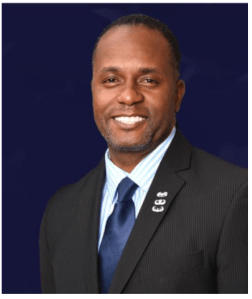
Q & A with Catherine Bennett Nwosu, District 3 Board of Education Candidate

Catherine Bennett Nwosu

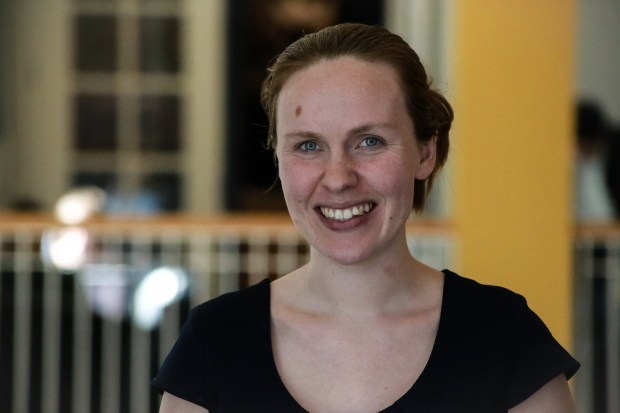
This is part of an ongoing series of interviews with the 2018 Prince George’s County Board of Education candidates. Catherine Bennett Nwosu is a candidate from District 3 (see district map here) running in the June 26 primary election. Ms. Nwosu answered questions generated by members of Prince George’s County Advocates for Better Schools.

Prince George’s County Advocates for Better Schools does not endorse or oppose any candidate for the Board of Education.

Tell us about your background and your plans to move our school system forward. Why do you want to be on the Board of Education?

My journey began as a K-12 student within the PGCPS system. I am a proud graduate of High Point HS and a first generation college graduate. During high school, I was inspired by my teachers to pursue education and graduated with my degree in English as a Second Language. I currently serve as Director of Extended Learning at a charter school network in Washington, DC, where I am responsible for afterschool programming across three elementary campuses. My daily responsibilities include staffing, compliance, budget, human resources, and curriculum.
I love the work I do currently, but I have continually seen the academic divide that exists in schools across our region. I’m tired of complaining about the challenges seen in my community and want to step up and work to bridge this divide in Prince George’s County. I know there is promise and potential here.

I am running for the Board of Education in Prince George’s County because of my concerns that we are not meeting the needs of ALL of our students in this district. Reforming our local schools is an urgent concern for me, especially since I myself am a mom with children in the school system. I want to push our thinking about the academic future of my children and children throughout our neighborhood because they deserve the absolute best everyday, and they are not receiving that now. But we can change that.

As a parent, I see how quickly our children grow both at home and in educational settings. We don’t have time to point fingers or make excuses. I’m ready to work collaboratively with parents, teachers, leaders, community members, students and board members to envision what we want to see in our schools, then work to make that a reality.

What would be your top three priorities while serving on the board, if elected?

The three major areas that I’d like to focus on as a board member are academic equality, collaboration, and capital improvement. Far too many schools in District 3 are overcrowded and academically underperforming, and it must be fixed.

We have recently been approved for a new elementary and middle school to be built in our area. Leveraging Public and Private Partnerships (P3) will go a long way to ensure that our schools are built efficiently, with quality, and within budget. However, it is not enough to focus solely on new school buildings that have been approved. The CIP budget must also be simultaneously used to make needed repairs to our existing schools. It’s not enough to create new seats – we have to improve the quality of the ones we have too.

We also know that there has been a lot of new home construction in our area recently without any planning for creating additional seats for the children living there. I will work collaboratively with the county council to ensure systems across our government that speak to one another and get proactive about school capacity needs.
Continue reading

Q & A with Matt Green, District 9 Board of Education Candidate

Screen Shot 2018-05-23 at 10.39.16 AMThis is part of an ongoing series of interviews with the 2018 Prince George’s County Board of Education candidates. Matt Green is a candidate from District 9 (see district map here) running in the June 26 primary election. Mr. Green answered questions generated by members of Prince George’s County Advocates for Better Schools.

Prince George’s County Advocates for Better Schools does not endorse or oppose any candidate for the Board of Education.

Tell us about your background and your plans to move our school system forward. Why do you want to be on the Board of Education?

I am a husband, family man, and father of four school age children vested in theirs and other children’s education, education choices and future. I am also a volunteer coach for a 3/4U flag football team, youth wrestling coach, President of a Youth Club, retired military leader, advocate and mentor. I am running with the encouragement and support of family, friends and neighbors.

Many feel based on my prior career as a Military Officer, I’d be a good fit for the Board of Education with my ability to prioritize, organize, be transparent, communicate, and make things happened. I have had the opportunity to interface with national and international governing officials at many levels from the start of my military career. I’ve also been in roles of diplomacy that included but weren’t limited to organization and nation building in both peacekeeping and combat environments. I’ve often been complimented on my demeanor to react calm and intelligently under pressure, while positively influencing the situation and others around me. I look for the opportunity to learn from not only my mistakes, but those of others and applying lessons learned.

What would be your top three priorities while serving on the board, if elected?

1) Along with a team of constituents, get into the schools with our students and educators to see things in action firsthand (this would include unannounced visits as the District 9 Board of Education Representative to keep a true prospective); next I’d prioritize and organize what needs to be done based on firsthand research, findings, parents and community feedback, research and align/reference policy and legislation; take action to fix problems.

2) Build rapport in the community; our community needs to know and understand their Board of Education representatives work for the students, educators, parents and community. This means having the tough conversations to solve problems, understanding that if it is torn down, there is the inherent responsibility to build back up (even stronger), going above and beyond to address and resolve concerns at local, state and possibly national level.

3) Bring Back the Pride; there are a lot of good news stories occurring across Prince George’s County Schools. We owe it to our students, educators, parents and community to highlight and share how great we are with the world. As well as continually growing Prince George’s County talent pool, we have a responsibility to share our positives with the world too.

Continue reading

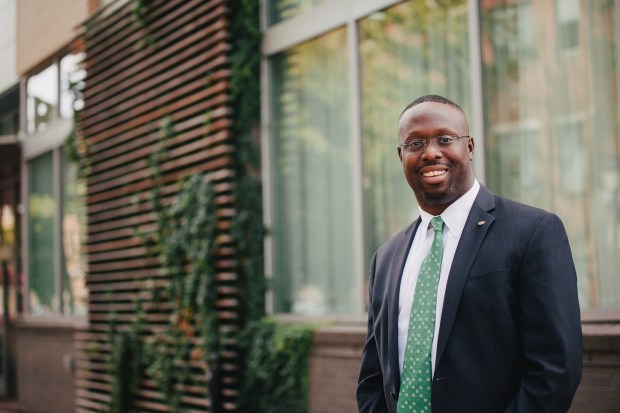
Q & A with Anthony Triplin, District 6 Board of Education Candidate

Copy of IMG_1698

This is part of an ongoing series of interviews with the 2018 Prince George’s County Board of Education candidates. Anthony Triplin is a candidate from District 6 (see district map here) running in the June 26 primary election. Mr. Triplin answered questions generated by members of Prince George’s County Advocates for Better Schools.
Prince George’s County Advocates for Better Schools does not endorse or oppose any candidate for the Board of Education.

Tell us about your background and your plans to move our school system forward. Why do you want to be on the Board of Education?

I have served in the United States Navy and in the Army National Guard. I have more than 10 years in accounting, auditing and budgeting experience. I see my mission on the Board of Education as helping explain where the actual money is going in the simplest terms and how we can better allocate it to serve our schools. Our school system is the bedrock of our community. I am passionate about bringing people together to plug into solutions that will strengthen our school system and improve opportunity for all children, because our community’s well being – our region’s prosperity – depends upon this. As an advocate for public education, I have worked collaboratively with people of many different backgrounds and worldviews. I have brought people around the table to find common ground and take action together on solutions. I believe that I can make a greater difference by bringing this approach to the school board.

I am committed to listening first, to leading thoughtfully and respectfully, and to building strong partnerships to find the best solutions for our children and the district. I am running for office because our school district is facing a number of challenges that require commitment and great leadership in the boardroom. I am committed to improving the quality of our public school system and realize that serving as a policy maker is one of the most direct ways to make a difference.

I feel that there is a need for quality and dedicated new leadership. I want to be on the school board because I care about children and their parents, I care about educators in this district and I care about the future of the county to attract and retain the best and brightest. I want to help mend the fences that have been broken in our community, to restore trust and integrity where it’s needed. I want to make sure that we continue the good things that happened under the previous administration.

What would be your top three priorities while serving on the board, if elected?

Provide a safe and effective learning environment for our students at every school. This includes making sure we have highly qualified teachers in every classroom and quality administration in every school. We need to identify and reward strong teachers and we need to expand our professional development offerings so all teachers can improve their performance in the classroom.

Utilize our resources more efficiently.​ Our “Weighted Student Staffing” and “Strategic Staffing” programs allow us to direct extra funding to the students who need additional resources to be successful. Give our students what they need to succeed by giving our teachers and principals what they need to succeed. We need to provide our teachers and principals with the right training, support, professional development, and resources to give our students what they each need to be successful.

Create a focused and strategic budget, that puts our money toward what works for students. We need to build strong community partnerships to ensure our entire community is pushing in one direction, for our students. Our students do their best when they have the entire community standing behind them. It’s easy to make promises, but living these promises IS what works, and I ask for your vote to continue to live these promises for the next four years and beyond.

Continue reading

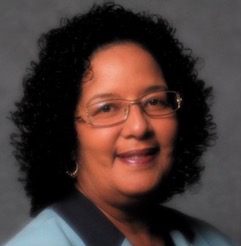
Q & A with Pat Fletcher, District 6 Board of Education Candidate

IMG_7196This is part of an ongoing series of interviews with the 2018 Prince George’s County Board of Education candidates. Pat Fletcher is a candidate from District 6 (see district map here) running in the June 26 primary election. Ms. Fletcher answered questions generated by members of Prince George’s County Advocates for Better Schools.
Prince George’s County Advocates for Better Schools does not endorse or oppose any candidate for the Board of Education.

Tell us about your background and your plans to move our school system forward. Why do you want to be on the Board of Education?

I am running to block administration and politicians from using our children and educators as political footballs. I am running to be the voice of the parents of our children who feel that their voices are not being heard. I am running for those parents, educators and children who receive little or no direction to be prepared to avoid incidents only to get them after the fact. I am running for that teacher who went in her pocket and spent her last $25 to ensure that a student had a pen, notebook and paper. I am running for that CEO who gave her all to the Head Start program and was terminated due to others in action (now going around the country inspecting Head Start programs for US Dept. of Education). I am running for that bus driver who rescued our babies from a burning bus and gets a dismal salary. I am running for that custodian who takes the extra time to actually talk and listen to our children. We have awesome children and staff. I am running to ensure they all have the resources they need so that our children will be competitive and succeed.

I started in the community and political arena when I was seven and perhaps earlier. Going to tenant association meetings, PTA, and commissioners’ meetings with my mom. She was active with the Toastmasters and a member of the Community Mental Health citizen’s advisory board. All of this took place in DC. I started in the political arena in Prince Georges’ County under Tommy Broadwater when he asked a group of us to volunteer for Steny Hoyer when he ran in the special election for Gladys Noon Spellman’s vacated seat. Assisted the statewide treasurer for Jesse Jackson’s presidential campaign (Carolyn Howard, Joanne Benson, Paul Pinsky, all teachers back then were Jackson Delegates and/or worked on the campaign). Treasurer for PGCDCC, School Board Member from 2006-2010; former president and vice president of Kentland/Columbia Park Boys and Girls Club; former PTA President of Forestville HS and G. James Gholson MS and presently president of Board of Directors for Village Green Mutual Homes, Inc. a cooperative in Landover for low to moderate income families. I have lived in Prince George’s County for over 40 years. Mother of two daughters and grandmother of 4. Both my daughters are graduates of county school system. Youngest daughter was an English teacher for 14 years in our school system. I have one grandchild presently attending a county school.

I bring with me a wealth of history of Prince George’s County school system. From directly experiencing the desegregation of the schools and the creation of magnet schools (which was segregation in disguise), the racism in selection of minority children in the TAG program, the building of a fence around Bowie annex when students from Bladensburg had to go there while Bladensburg HS was being rebuilt and were not allowed to walk in the Bowie neighborhood, minority students not being able to take AP courses, and the schools in my district getting little or no funding. I am a firm believer in that you need to know and understand where you have been before you can move forward.

Continue reading

Changes in Capital Improvement Program Aim to Ease Overcrowding in Prince George’s County Schools

32430412_10156012172835546_3445186554534821888_n (3)

by Lori Morrow

The Capital Improvement Programs (CIP) team provided a presentation on Enrollment and Facility Utilization at the Prince George’s County Public Schools Board of Education meeting on May 10, 2018. The slides provided an overview of projected K-12 enrollment over the next ten years, including a breakdown by elementary, middle, and high school levels. The presentation also included maps highlighting the over- and underutilization of school facilities and challenges associated with each. (Video of the presentation here.)

Here are a few highlights of the presentation:

  • The overall PGCPS K-12 enrollment has grown by 6,000 students since 2010 and is expected to increase by 8,000 students over the next ten years. Enrollment projections are established using the Cohort Survival Methodology that uses three inputs: births; historical ratio of students progressing from one grade to the next; and development in the area that includes typical “pupil yield” from each housing type.
  • Overutilized facilities (operating above the state-rated capacity) are heavily concentrated inside the beltway north of Central Avenue, while there are more underutilized facilities south of Central Avenue.
  • PGCPS currently has 542 portable classroom units, or “temps.” Some school sites do not have space for any additional units. Forty percent of the portables are 25+ years old and have exceeded their standard life cycle. PGCPS is planning to purchase 25 new units, at an installed cost of $95,000 each. This is the first PGCPS purchase of new portables in over ten years.
  • The top three projects on the CIP list (International HS at Langley Park, William Wirt MS, and a new Adelphi Area MS) could take 4-5 years to complete based on historical funding for capital projects, which does not provide immediate relief to those areas. In general, boundary changes and programmatic changes (like adding the Aerospace and Aviation program at Duval HS) are quicker solutions to addressing overutilization than building new facilities.
  • CIP Director Shawn Matlock presented information about a new CIP delivery method, designed to allow the completion of more facilities in a shorter amount of time. The plan would use alternative financing methods including Public-Private Partnerships (P3). The private entity would build the facility and maintain the building over a 25-year period. This method could be used for five to seven facilities (not yet fully identified). (Video link here.)
  • Under the new CIP delivery method, some facilities would receive “staged renovations” using only local PGCPS/county funds. This could speed up the process by eliminating state involvement. The list of “Cycle 1” schools recommended for modernization, staged renovation, or new schools is included in the FY 2019 Amendments to the 2017 Educational Facilities Master Plan.
  • CIP staff explained the difference between overutilization (facilities that exceed State Rated Capacity) and overcrowded classrooms. Overcrowded classrooms can also occur due to underutilization, where the number of students does not justify funding through the Student-Based Budgeting to support additional staff even though classroom space may be available. This can be especially challenging at smaller schools.
  • CIP staff and CEO Kevin Maxwell explained some of the challenges in shifting a large number of boundaries southward to balance the northern overutilization. In addition to potentially increasing transportation costs as students are moved further from neighborhoods, shifting boundaries is not always supported by the will of the communities involved.

The FY 2019 Amendments to the 2017 Educational Facilities Master Plan passed as a first reader at the May 10 meeting and is expected to return to the agenda on the June 7 meeting for action as a second reader. The document elaborates on many of the topics discussed and includes lists of schools in the first EFMP cycle. In addition, it identifies 18 planning areas recommended for possible boundary changes or school consolidation. Community engagement and forums are expected to start as early as the summer and continue throughout the fall/early winter.

Continue reading

Protecting Due Process for Prince George’s County Teachers

IMG_6404

The author is an employee of Prince George’s County Public Schools (PGCPS) who wishes to remain anonymous. The opinions expressed in this piece are the author’s own and do not necessarily reflect the views of Prince George’s County Advocates for Better Schools.

The past few years have certainly been traumatic for Prince George’s County Public Schools.. Educators, parents, and students in PGCPS have had to weather storm after storm after storm. For most of the issues that have come across the public’s attention, there are parallels with other school districts. Yet there is one issue that in its scope is truly unique to Prince George’s County Public Schools: the placement of hundreds of its staff on administrative leave, often for months at a time, during the 2016-2017 school year.

It is difficult to find another district that had an administrative leave crisis like this one. In 2014,the Baltimore Sun reported leave statistics for some other districts in the region, with Baltimore County taking the lead at 230 employees on leave in a year at a district similar in size to PGCPS. Most recently, Providence Public School District in Rhode Island had a spike in administrative leave cases this year involving new reporting requirements. However, the district revised its policy by the middle of December, as it was quick to recognize the inherent problem in having too many teachers on leave.

In the case of Prince George’s County, a whole school year went by and local news outlets had to run several stories before district leaders would even acknowledge that there was a problem. In fact, a June 1, 2017 release from PGCPS defended the district’s handling of the situation, saying “No price is too high for a child’s well-being.”

It’s an interesting statement, considering the thousands of students whose academic well-being were harmed by the sudden departure of their highly qualified teachers, often for weeks or months at a time. Not only did the leave situation cost the district almost $10 million, it also did serious damage to the academic progress of students in all grades. Substitute teachers work hard in challenging circumstances, but they are not paid to be the full-time professionals that are expected to be there to serve the students of Prince George’s County.

There have been varying reports of the number of teachers on leave in 2016-2017.  The Washington Post reported the number to be in the range of 400 to 500 out of over 800 total employees placed on leave.  Recently, the Prince George’s County Education Association (PGCEA) has stated in its communicationsthat over 600 teachers were placed on leave that year. If we take the PGCEA figure, multiply that by five instructional hours in a day, and then multiply that figure by a ballpark estimate of 50 instructional days lost per teacher on leave, the product is 75,000 hours of lost instruction by certified teachers. The impact is then multiplied by the number of students affected. While many elementary school teachers are in self-contained classrooms, PGCPS often has students in upper elementary grades go to different teachers for different subjects, and teachers at this level often interact with 50 or more students on a daily basis. Middle and high school teachers frequently teach six classes, with their impact reaching well over a hundred students.

Continue reading

How a Handful of Parents Transformed Two Staff Lounges

by Robyn Kravitz

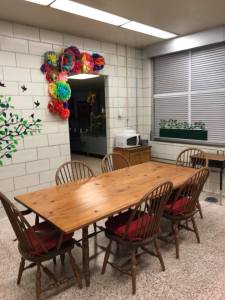
Our children spend almost as many waking hours at school as they do at home. And our teachers spend even more time at school than our students! So when a few parents learned about the drab teachers’ lounge at the Benajamin D. Foulois Creative and Performing Arts Academy, we knew we had to do something. We wanted the staff at the school to know that we loved them for loving our kids. We wanted the staff to know that those moments they spend making sure our kids eat their lunch, catch their bus, have their homework in their backpacks, and know they have a safe place are VERY noticed.

Walking into the teachers’ lounge wasn’t nearly as shocking as walking into the lounge for the food service workers. Both rooms were dirty, dark, and unloved. Something had to be done. So over the course of about two months, the four of us worked with our principal to develop a plan: We would paint, clean, decorate and give some life to both spaces. Our plan included using the school’s colors, blue and yellow, to give the space some spirit. We wanted to give the space a touch of practicality too, by doubling the amount of refrigerator space and providing more places for lunches to be cooked.

30582185_10101323766239168_7296234309162209730_nAfter we developed our plan, we scoured CraigsList, FreeCycle, Facebook Market Place, thrift shops, and worked with the management at our local Home Depot to stay within a very small budget — and a lot of heart — to fill the lounges with a new work station, new table, new decor, a new microwave and refrigerator.
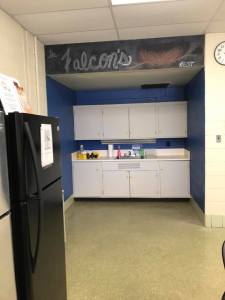
30572264_10101323766403838_33446095655920337_nOver the week of PGCPS’s spring break, we went to work. We spent the first day cleaning. Everything from the chairs to the floors to the butcher paper, everything got a solid scrubbing. We spent days two and three painting the walls and cabinets, painting a chalk board sign for motivational quotes, and putting up vinyl decals to match our theme. The fourth day consisted of putting it all back together. Our Falcon blue and yellow teachers’ lounge now has a fun and spunky feeling with a quote that reads “Be the teacher who eats the last cupcake in the teachers’ lounge because we need teachers who are FEARLESS!” And the food service workers now have a room that makes it feel like spring has sprung!

30443599_10101323750909888_1300821000710803888_n

Continue reading

Notes on the March 29 Board of Education Meeting

by Katie Moran

At 6:43pm, the Board of Education meeting was finally beginning. With 29 public speakers lined up to speak, I knew that this meeting would cover many controversial topics and not be short. It began with an amendment to the agenda, moving items 10.1, an emergency item related to the calendar and 9.1, the vote on Turning Point Academy’s future, to immediately follow public speakers. The agenda and the minutes from the last meeting held on 2/22/18 were approved. Following that was a nice video on “Having Seuss For Breakfast.”

The report of the Chair included mention of Prince George’s County offering more Italian language classes than any of its neighboring counties. Recently, Dr. Maxwell was recognized with the Knight of Order of Merit of the Italian Republic. The Kiamsha Youth Empowerment Organization was recognized with a proclamation (http://kiamshayouth.org). It was announced there would be a Board of Education meeting April 12th at 1pm.

The report of the CEO included celebrating the youngest Spelling Bee Winner, a 5th grader from Melwood Elementary. He will be moving on to the next level at the National Harbor. The school walkout (organized by the students and not the county) was considered a success. Student safety remains a top priority and PGCPS will continue to implement recommendations from the student safety task force.

The legislative report was discussed. A new emergency bill just passed the Maryland House and is expected to pass in the Senate. Mr. Burroughs says that the Governor has agreed to sign the bill when it is put in front of him. Ms. Boston then made a motion to reinstate spring break, but was asked to save that for when it was discussed in the agenda, 10.1.

Twelve speakers showed up in support of Turning Point Academy (TPA). There were multiple student speakers who shared stories of opportunities TPA offered that were not otherwise available in their neighborhood schools. Belinda Queen, grandmother of a TPA student, urged PGCPS to “put children first for a change.” The school produced standardized math score averages higher than the state average and had a 99% college acceptance. There were accusations of nepotism by the charter review office, but that was corrected immediately. The passion from these speakers was undeniable.

Continue reading

Notes on the February 1 Board of Education Meeting

by Nichelle Mandjilla

To view the agenda for the meeting, go here.

Public Session

 2.01, 2.02  Board Prayer and Pledge of Allegiance

Led By Amanya Paige, Student Member

2.03 Roll Call

Attendees:

Segun C. Eubanks, Ed.D, Board Chair/Appointed Member
Carolyn M. Boston, Vice Chair/District 6 Member
Lupi Quinteros-Grady, District 2 Member
K. Alexander Wallace, District 7 Member
Sonya Williams, District 9 Member
Raaheela Ahmed, District 5 Member
Curtis Valentine, M.P.P., Appointed Member
Donna Wiseman, Ph.D, Appointed Member
Amanya Paige, Student Member
Chief Executive Officer Kevin M. Maxwell, Ph.D.

*David Murray, District 1 Member, Dinora A. Hernandez, District 3 Member and Mary Kingston Roche, Appointed Member were not in attendance.

* Edward Burroughs III, District 8 Member and Patricia Eubanks, District 4 Member arrived at a later time, after meeting had been called to order.

 2.04 Adoption of the Agenda: February 1, 2018 Board Meeting

Chair Eubanks moved to adopt agenda. Motion was seconded.

Motion carried unanimously to adopt agenda

2.05 Approval of Board Meeting Minutes: November 9, 2017 Board Meeting and December 19, 2017 Special Board Meeting

Chair Eubanks moved to approve meeting minutes. Motion was seconded.

Motion carried unanimously to approve meeting minutes.

2.06 News Break “Green to the Gills”

Highlighted Maryland Department of Natural Resources “Sunfish & Students” Program. The program is in its 4th year, and active in 90 Prince Georges schools. The goal of the program is to teach student aquarium maintenance, animal husbandry and ways to keep fish alive. Students complete journals with diagrams and drawings, often in Spanish. Students, such as those at a Capital Height elementary school who were interview and observed in this video, adamantly take on the responsibility of caring for fish, like the Blue Gill, until they are released into local waterways in the Spring.

Continue reading

Legislative Update: School Calendars

29391631_10155883152860546_841621907_o

by Lori Morrow  

Update as of March 30: The Prince George’s County Board of Education voted unanimously last night to restore spring break. Schools will open on April 9. See the PGCPS press release here.

Clearly Mother Nature has her own agenda this year, and it did not include allowing spring to start on time. The late season snow, coupled with the recent “wind day,” are wreaking havoc with spring break plans for families and staff. Prince George’s County Public Schools (PGCPS) has announced that it will use both April inclement weather days that were programmed when the 2017-18 school calendar was created, as well as an additional day on April 4 (see PGCPS’s March 22 announcement here). The two days in June and one make-up day in February have already been used.

This year’s school calendar is the first since Governor Hogan’s executive order that mandated all public schools start after Labor Day and end by June 15th. The compacted schedule has created challenges for PGCPS administration and other districts around the state trying to balance instructional days with professional development, state-mandated holidays, and possible inclement weather. While Maryland law does have a process for waivers, the State Board of Education has not approved any waivers to the 180-day requirement yet this year.

Unfortunately we cannot control the weather, but there are two bills before the Maryland General Assembly that may allow for greater flexibility in future school calendars by modifying the June end date:

SB 729/HB 553 would authorize a county board of education to extend the length of the school year for up to 5 days without approval from the State Board of Education. The bill was passed unanimously by the Senate and is scheduled for a hearing in the House of Delegates at 1 PM on Thursday, March 29.

HB 679 would require public schools to complete the school year on or before the third Friday in June.  This would help account for the variability in the length of the school year because Labor Day is not a fixed date.  This bill passed the House with a 125-12 vote but has not been scheduled for a hearing in the Senate.

How can you help? Contact your State Delegates and Senators and ask that they support SB 729/HB 553. Phone numbers and email addresses are available online.  You can also submit testimony by writing or in person for the March 29th hearing.

Continue reading