FY 2018 Budget Questions Answered

Monday’s budget information session was a lively event, with more than 50 attendees and a slew of questions about funding for such areas as maintenance and repairs, Pre-Kindergarten education, Student Based Budgeting, and transportation. In advance of the event, the Office of Budget and Management Services, under the direction of John Pfister, prepared answers to 29 questions that members of the community had submitted.

The questions and their answers are found below (and available in PDF format here). It may be helpful to refer to the proposed Operating Budget for Fiscal Year 2018, found here.

1. Is there any increase or decrease in the amount of funding proposed for home and hospital tutors and/or one-on-one aides?

There has been no request to increase or decrease in the level of funding for home and hospital tutors for FY 2018.  To date the funding level is projected to remain the same as FY 2017.

2. Is special education instruction receiving additional funding under the proposed budget?

Yes, there was an increase of $2.6M in Special Education for FY 2018. This increase in funding for Special Education will provide supplemental resources such that budgeted amounts will support anticipated costs based on prior year expenditures. 

3. How much is budgeted to pay substitute teachers and how does that compare to prior budgets?

The FY 2018 Proposed Budget contains $16.8 million for substitute teachers as compared to $17.4 million for the FY 2017 Approved Budget and $19.7 million for the FY 2016 Approved Budget.

4. The Budget in Brief Document reflects a decrease in Federal funding in the amount of $6,493,626. Is this the loss of head start funding? Is there funding included in the proposed budget to make up for the lost federal head start funding? What’s the earliest that this funding could be restored from the federal government?

The decrease in Federal revenue of $6,493,626 in the Budget in brief reflects the loss of funding for the Head Start program. There is no funding in the proposed budget to replace the federal Head Start program funds. However, current students in the Head Start program will be absorbed into the district’s existing Pre-K program at a cost of $5.1 million and require additional staffing of 68.0 FTE. If the district were to seek Federal funding for the Head Start program, application for the funds would have to occur by May 1, 2017 and would cover the time period of August 1, 2017- July 31, 2018.

5. Focus Area 1: Academic Excellence includes Diversity Specialist & Supports at a change of $289,568. Does this represent the salary of one person?  How much of this is salary, not including benefits?

The Diversity Office increased by 1.0 FTE under the Interpreting and Translation Services. The FY2018 Proposed budget includes a 1.0 FTE for an ELL Family Engagement Specialist at an estimate cost of $ 76,608 plus $ 30,975 in benefits. Interpreting and Translation Services proposed an increase of $ 181,985 to support existing contracts for translation. Language Links and Transact need additional funds due to increased use.

6. Focus Area 2: High-Performing Workforce: What is a Mentor and Peer Assistance & Review (PAR) Teacher? (7 FTE’s, $813,775)

The Mentor and Peer Assistance & Review (PAR) Teacher includes Mentor Teachers to provide coaching, demonstration lessons, shared lesson planning and professional development sessions for teachers with a focus on Framework for Teaching. COMAR regulations (13A.07.01) recommends a maximum ratio of 15:1 (mentees/mentors), and this additional staffing will allow PGCPS to get closer to meeting that recommended ratio. The Peer Assistance and Review (PAR) program uses expert teachers to provide regular, consistent support to struggling new teachers to ensure their future success in the classroom.

7. Communication Specialist (Board of Education), $140,423 – Is this a newly created position?

The Communication Specialist in Board of Education Office is a newly created position proposed for fiscal year 2018.

8. Overtime supporting services $6,000,000. Please describe what this pays for? How does this compare to the amount spent on this expenditure last year?

The FY 2018 Proposed Budget includes $6.0 million to support overtime in the division of Supporting Services to align the budget closer to historical expenditure levels.  This brings the total appropriation for all funds for FY 2018 to $9.1 million.   These funds are to support overtime for Transportation, Maintenance and Plant Operations.  Overtime within these departments has been increasing due to absences, mid-day runs and additional routes. Expenditure for FY 2017 were $12.1 million. Management is researching alternatives to reduce overtime usage in the future.
Continue reading

PGCABS to Host Budget Q & A Session

by Tommi Makila

Budget season for Prince George’s County Public Schools is in full swing. The CEO’s proposed operating budget for Fiscal Year 2018 is now available on the PGCPS website. If you don’t have time to read the whole budget, consider reading the introduction, which includes specific changes in expenditures compared with last year’s budget (p. 16-19), as well as information on capital improvement projects (p. 20-24).  A less-detailed Budget in Brief document is also available.

Prince George’s County Advocates for Better Schools (PGCABS) is hosting, in collaboration with PGCPS staff, a question and answer session about the proposed operating budget on Monday, January 23 at 6:30 pm at Ernest Everett Just Middle School. This will be an excellent opportunity for interested residents to pose questions to the PGCPS budget office staff about the proposed operating budget. PGCABS hosted a similar Q&A session on the budget last year.

Questions about the budget can also submitted in advance of the meeting by clicking here (or send an email to pgcabschools@gmail.com). PGCPS budget staff will prepare answers in advance of the meeting. Emailed questions need to be submitted by Monday, January 16.

The Board of Education will host three public hearings during which residents will have an opportunity to comment on the CEO’s proposed budget. These hearings will be held on January 24, January 31, and February 7, at 7 pm. To sign up to speak at the hearings, call the BOE office at 301-952-6115. Each speaker will have three minutes to make his/her comments.

Journey to Kindergarten: We’ve Arrived!

This is the sixth part of a series documenting the steps one family is taking to prepare for their son’s entrance into kindergarten next year. Read Part 1 here, Part 2 here, Part 3 here, Part 4 here, and Part 5 here

by Gail Z.

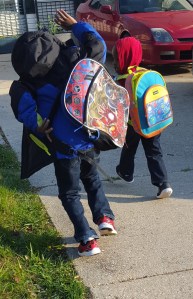
20160406_080252 (1)We’re nearing the end of 2016 already, and are moving into the second part of the school year. It’s flown by so fast, but we are enjoying — and surviving — kindergarten!

Our son has adjusted well. He loves his teacher (she really is great), he has some favorite classes (computer and P.E.), and he is doing really well. We are just as pleased today as we were when we visited the school back in the spring. Here are some of the reasons why:

  • It’s run like a well-oiled machine. From weekly parent communication folders used to send home everything from important calendar dates to information about community happenings, the school’s superstar staff has not missed a beat. And speaking of staff…
  • Every encounter with staff has been positive. I have called and visited the front office, emailed my son’s teacher, walked into the building unsure where to go and have always received a pleasant response/answer.
  • They host wonderful events. My husband ranted and raved about Danishes for Dads, a program held one morning in October to honor the men in the student’s lives. Our boy surprised my hubby by reading a few sweet sentences he’d written about him.
  • An Active PTA. So far, there have been two dances, a book fair, a holiday gift shop, a fundraiser, and Chick-Fil-A and Chuck E. Cheese night. I love that there are parents like me who are so actively involved.

We are so happy and blessed to be having such a wonderful experience thus far. We look forward to watching our boy grow and mature in his time at his new school and will be looking forward to his brother joining him there in just a couple of years.

Memo to Staff: Don’t Send Work-Related Emails on the Weekend

Natalie Barnes is a mathematics middle school teacher in the county. The views expressed are the author’s own.

by Natalie Barnes

On November 2, Prince George’s County Public Schools CEO Kevin Maxwell sent a memo to all staff regarding weekend email communication:

“The nature of our work often requires us to miss opportunities to spend time with loved ones. I would like to announce a change that hopefully encourages you to seek a better work-life balance.

“Effective Friday, November 4, I am strongly discouraging weekend email communication. Please refrain from sending emails after 6:00 pm on Fridays unless it is an emergency situation.

“You may resume sending emails Monday morning. I ask that supervisors maintain current contact information for all staff members in the event of an emergency.

“As always, thank you for all of the work that you do on behalf of our students and schools.”

Continue reading

How the PGCPS Governance System has Changed Under HB 1107: A Before and After Comparison

Image 2-20-16 at 4.28 PMby Genevieve Demos Kelley

The governance system of Prince George’s County Public Schools was restructured in 2013 under House Bill 1107. Many people know that HB 1107 changed the structure of the Board of Education from an all-elected board to a hybrid of elected and appointed members. But there are several other features of the bill that have significantly changed the way the school system is governed.

Here’s a before-and-after table highlighting some of the changes made under HB 1107:

Before HB 1107 Under HB 1107 (Effective June 1, 2013)
Members of the school board are elected. Board is a combination of members who are elected and appointed. (Section 3-114)
Nine elected school board members, each of whom resides in a different school district; one student member of the board. Nine elected board members, one student member, and four appointed board members (three appointed by the County Executive and one appointed by the County Council). (Section 3-114)
Board needs a simple majority to pass a motion. The school board requires a two-thirds vote to take an action that is contrary to an action of the CEO. (Section 4-403)
Board members elect a chair and vice chair of the school board once a year, from among the members of the school board. The County Executive selects the chair and vice chair of the school board for a two-year term. The vice chair is appointed from among the elected members of the board. (Section 3-1004)
If a seat on the Board becomes vacant more than 180 days before the end of the term, it is filled at a special election.  If a seat held by an elected member of the Board becomes vacant, the County Executive fills the vacancy by appointment. (Section 3-1002)
The head of the school system is known as the Superintendent of schools. The superintendent is the Chief Executive Officer (CEO) of the school system. (Section 4-101)
The school board has authority to consolidate schools. The CEO has the authority to consolidate schools. (Section 4-120)
The school board selects and appoints the superintendent of the school system.  The County Executive selects the CEO of the school system from a list of three candidates provided by a search committee. The school board then appoints the CEO after agreement on contract terms negotiated by the chair of the county board.  (Section 4-201.1)
The county superintendent is responsible for the administration of his office. The CEO is responsible for the administration of his office, including hiring and setting the salaries of the executive staff. (Section 4-204)
 The county school board shall employ individuals in the positions that the county board considers necessary for the operation of the public schools in the county. The CEO of the school system shall hire and set the salaries of a Chief Operating Officer, a Chief Financial Officer, a Chief Academic officer, a Chief of Staff, a Board Liaison, and any other necessary executive staff in the office of the CEO. (Section 6-201)

Continue reading

Our Transition from Private to Public School

by Llew B.

file_000Make no mistake, parents are having tough conversations about school choices this time of year. It was no different for my family last fall when discussing options for my daughter, who at the time was in 8th grade and beginning her 6th and final year at a parochial school in Bowie. Fast forward to 2016, and we’re a couple of months into her transition to Bowie High School (BHS). I’m writing to share my own thoughts on my daughter’s transition and suggestions for middle school parents and Prince George’s County Public School (PGCPS) officials.
Why We Chose Public

Financial considerations were a primary factor in our decision to transition from private to public high school. Yearly tuition for private high school tends to be substantially higher than it is for the middle grades. A family could easily spend $60K for high school over four years, compared to $30K or more in middle school, over the same time period. Furthermore, our second child would enter high school in my daughter’s junior year, and we assumed there would again be a period of overlap in college.

We engaged in a number of information gathering activities to help us make a more informed decision. To better understand public school options, we investigated specialty programs for highly motivated students (ex. Summit at Bowie High), toured the facility for 9th grade students at BHS, and met with several BHS students and their parents. Our key findings were not surprising. We did not discover a treasure trove of gleaming facilities, but we didmeet staff and parents with similar goals. The students we spoke with described experiences that were fair to positive, and we heard no anecdotes that were cause for alarm.

Last but certainly not least, there was an element of hope for potential improvement in our public schools, over time. Through Prince George’s County Advocates for Better Public Schools (PGCABS) and other venues, I began meeting people interested in public school advocacy, and I interacted with various levels of PGCPS administrators who seemed to welcome outreach from people in the community.

The Transition

We’re only two months into the high school journey, but my daughter is doing fine. Below I provide comments ranging from the social environment to academics.

Social environment

High on the list of factors that impact the adjustment to high school is the ease at which a student makes new friends. While the majority of 9th grade students appear to come from the public middle schools that feed into BHS, it appears that a sizeable number of students are new to the area and my daughter has made a number of friends from this pool. Also, school spirit seems to be fairly high from what I gathered while volunteering during homecoming week.

Transportation

I’m pleased to report that we have had no significant issues with transportation. I’m aware that transportation issues are a major concern for students county-wide.

Safety

The environment seems to be safe and orderly. My daughter has stated that in most of her classes, students actively participate and there is minimal disruption to the daily routine.

Continue reading

Groups Produce “Sample Ballots” Not Authorized by Democratic Party

by Genevieve Demos Kelley

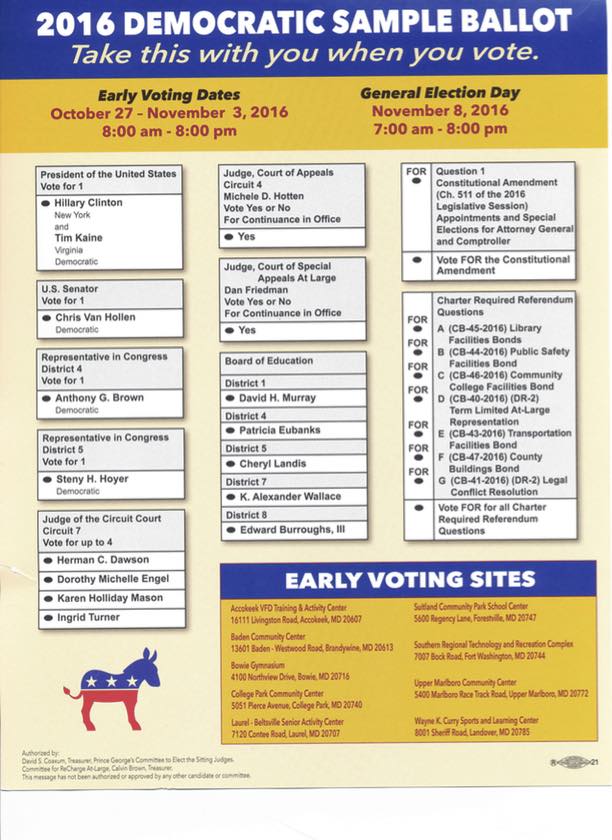
Many Prince George’s County residents have received a mailer that contains what appears to be an official sample ballot for the Democratic party. Words in large letters across the top read, “2016 Democratic Sample Ballot; Take this with you when you vote.” The mailer even bears the Democratic logo: a red and blue donkey with white stars.

Predictably, voters are instructed to support the Democratic candidates for president, U.S. senator, and congressional representative. But voters are also told to vote for a particular slate of judicial candidates, as well as candidates for the Board of Education. This is highly misleading. School board elections and judicial elections are nonpartisan; candidates do not run as representatives of a political party.

Moreover, this sample ballot is not actually produced or authorized by the Democratic party. According to the fine print in the bottom left corner, the mailer is authorized by two committees: the Committee to Elect the Sitting Judge, a nonpartisan group advocating for election of the sitting judges of the Prince George’s County Circuit Court, and the Committee for ReCharge At-Large, a pro-Question-D group that supports adding two at-large candidates to the County Council.

2016-democratic-sample-ballot-1-1

In previous election years, the Prince George’s County Democratic Central Committee has voted to endorse a slate of candidates for the Board of Education. This year, however, the Committee voted against endorsing school board candidates. The Committee also decided not to endorse a position on Question D, which would add two at-large seats to the County Council. But the mailer tells Prince George’s County residents to vote “yes” on Question D, suggesting that the Democratic party officially supports the proposal.

Continue reading

Four Ways to Reduce Disruption When Teachers are on Long-term Leave

IMG_6404Earlier this month, the Washington Post reported that at least 250 employees of Prince George’s County Public Schools are on paid administrative leave due to allegations of inappropriate conduct. At the October 25 Board of Education meeting, a PGCPS parent presented these suggestions for how to minimize the disruption to instruction amid an unprecedented number of teachers out on administrative leave. The opinions and views expressed are the author’s own.
by Cicely L.

Parents, kids and school leaders are scrambling to deal with the unprecedented number of teachers on administrative leave. Since it does not appear this problem is going away anytime soon, it is time for PGCPS to be proactive rather than reactive, and find ways to ease the transition for everyone involved. So here are 4 suggestions that may help…

1. Give parents relevant information about who is taking over the class when a teacher is on administrative leave.

It is helpful to know the name of the long-term substitute, but it is equally important to know how we can get in touch with them. Provide an email address and inform parents what steps are available to get in contact with the long-term sub or another school official if we have questions on assignments or concerns about our child’s performance.

2. Standardize the timing in which parents are notified when a there is going to be an extended absence of a teacher.

Why are parents in the dark for weeks about who is teaching our children? PGCPS should implement protocols that standardize the timing in which this information is provided. Right now it seems as if the timing is triggered after enough parents complain and demand answers. That is not effective or efficient. Formalize the timeline and require each principal to send a letter home to parents within a certain time period (preferably 48 hours) after it is determined a teacher will be placed on administrative leave.

3. Give principals and school representatives the tools necessary to answer questions from parents about a teacher’s absence. 

It is clear that there is uncertainty in what information can be provided to parents while still maintaining the confidence of teachers. Let’s take the uncertainty out. Let’s stop the rumors and speculation which is far more harmful to an innocent teacher’s reputation. Consider preparing a standard script for school leaders to have available to address these questions. There has to be some wording that doesn’t violate teacher privacy while also giving parents what they need to understand what is happening in their child’s classroom. Distribute it to principals, assistant principals and office personnel so they know how to handle these questions from parents and especially kids who are wondering about the whereabouts of their teacher.

4. Implement strategies to ensure children with long-term substitutes are not falling behind. 

I have heard a number of assurances from various administrators stating their first priority is to maintain a consistent quality education for our children even in periods were a long-term substitute is in place.

Yet, there are plenty of stories of classrooms where no grades have been posted to School Max for weeks. Completed homework assignments that come home day after day with no evidence they have been graded or even looked at. No clear answers whether long-term subs are periodically observed in the classroom. I don’t have these expectations of a typical substitute, but the criteria are different when stepping into the role of a teacher for a long period of time.

Continue reading

Q & A with John Richardson, District 7 Board of Education Candidate

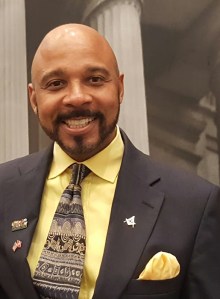
20160606_083607This is part of an ongoing series of interviews with PGCPS Board of Education candidates. John Richardson is a candidate from District 7 (see district map here). Mr. Richardson answered questions generated in advance of the primary election by members of Prince George’s County Advocates for Better Schools. 
Prince George’s County Advocates for Better Schools does not endorse or oppose any candidate for the Board of Education.

Tell us about your background and why you are running for the Board of Education.

My passion is grounded in public service where all citizens’ quality of life, educational growth as well as development is a priority. I’m a veteran frontline educator with more than 17 years combined experience which include serving as a Career & Technical Education Teacher (formerly vocational education), Assistant Principal on the secondary level, Dean of Students, Testing Coordinator and Summer School Principal. It was a pleasure serving 2 ½ years in the Maryland General Assembly as a Constituent Services Liaison for Legislative District 25.

In addition, I have served in ministry for over 17 years in the capacity of Sunday School Teacher, Youth Pastor and Pastor. Moreover, my experience includes honorably serving our country in the United States Marine Reserves while matriculating at the University of The District of Columbia (UDC) where my Bachelor of Science Degree in Printing Management was obtained. Subsequently, my Master of Education in Curriculum & Instruction Degree was obtained at National Louis University. 

I’m running for Board of Education because all of my professional experiences have prepared me to effectively represent the constituents of District 7. I am a proven leader who has prepared students for college and careers. I have improved the academic achievement of students, improved parental involvement, implemented policy and engaged the community in the educational process. Furthermore, as Chairman of the MD4 Pedestrian Safety Enhancement Project Community Task Force, I have collaborated with local and state government agency representatives along with concerned citizens on a $24 million dollar project currently in progress between Silver Hill Road and Forestville Road that will continue to save lives while enhancing our community!

What are your top three goals for PGCPS, and how do you plan to accomplish them, if elected?

In my opinion, academic achievement and our consistent ongoing ranking near the bottom quartile compared to other school districts in the state of Maryland despite incremental gains that are celebrated yearly is a significant problem. My top three goals are below:

  1. Improve overall academic achievement and ninth grade promotion rates.
  2. Engage the community in the educational process while improving parental involvement which can assist in creating safe welcoming environments.
  3. Improve communication between the Board of Education, schools and all stakeholders.

I’ve already started collaborating with stakeholders about accomplishing the aforementioned tasks. Upon being elected, with the help of a core group of diverse leaders, we will organize a Town Hall Meeting to provide stakeholders with an opportunity to provide feedback and input. Also, we will have ongoing sessions throughout the year not only assessing our weaknesses but creating strategies to maintain where we are strong and overcome all challenges. In addition, we will assess our progress and make changes as needed. 

Improving communication takes a conscious effort which includes being considerate of a parents’ time. Events must be planned way in advance with timely notification to parents, guardians, caregivers and students. Oftentimes, community leaders and the citizens at-large are unaware of the great things happening in our school system. I use most social media platforms to keep my family members, friends and the community informed which will continue during my term as a Board Member. I utilize email blast campaigns, group text messaging, instant messaging and a host of other forms of communication to keep people informed.

Continue reading

Q & A with District 5 Board of Education Candidate Cheryl Landis

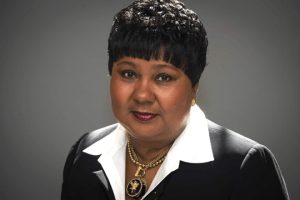
image_cherylLandisThis is part of an ongoing series of interviews with PGCPS Board of Education candidates. Cheryl Landis is a candidate from District 5 (see district map here). Ms. Landis answered questions generated by members of Prince George’s County Advocates for Better Schools. 

Prince George’s County Advocates for Better Schools does not endorse or oppose any candidate for the Board of Education.

Tell us about your background and why you feel that you would be an effective member of the Board of Education.

For the past 37 years, I’ve been an active volunteer, community organizer, and servant leader in Prince George’s County. I made a deliberate and decisive decision well over 10 years ago that upon my retirement from Prince George’s County Public Schools (PGCPS), I would transition to serve as an elected member of the Board of Education. On November 1, 2016, I will officially retire from PGCPS with 27 years of service. For 17 years (1989 to 2006) I served as the Executive Administrative Officer to the very same Board of Education I seek election to. During that time, I worked directly with numerous boards of education, both elected and appointed. For the past 10 years (2006 to present) I have served as the school system’s Strategic Business Partnerships Specialist, as well as Administrator for the Excellence in Education Foundation for PGCPS, Inc. I’ve also had the honor of serving as Chair of the Education Workforce Development Committee of the Prince George’s Chamber of Commerce. I was recently selected by Junior Achievement of Greater Washington to serve on the Junior Achievement Finance Park Prince George’s County Advisory Council.

Each and every step that I have taken over the past 37 years has successfully prepared me to serve as an elected member of the Board. I realize the awesome responsibility and commitment of time that will ultimately come with the position. I understand that the mission of the Board of Education is to advance the academic achievement of all students through community engagement, sound policy governance, accountability, and fiscal responsibility. Because of my many years of experience, I have a very clear and concise understanding of the role of a Board Member. I have already defined my scope and purpose for working collaboratively with the Administration and my colleagues as an elected member of the Board. I will hit the ground running!

What are two or three special challenges that you see in your school board district, and how would you work with the community to address them?

Challenge No. 1 — Family & Community Engagement: Family and community engagement are important components to the academic success of a student. That is why educating our youth must be viewed as a shared responsibility between the school system, parents, and students. As an elected member of the Board of Education, I will take a “grassroots approach” to effectively increase family and community engagement by implementing the following strategies in District 5 schools:

  • Beginning January 2017, I will meet individually and on an ongoing basis with District 5 principals and PTA/PTO to assess the needs of the District.
  • I will work with District 5 schools to establish a fully engaged, highly functioning PTA/PTO where none exist
  • I will attend monthly scheduled PTA/PTO meetings on a rotating basis. The goal is to encourage, motivate and inspire parents in their efforts to support their children academically.
  • I will work collaboratively with the respective school principal and the established PTA/PTO to develop partnerships with the business community, nonprofits, community organizations, etc., that will supplement and support the academic achievement of District 5 students. All partnerships will be established in accordance with Board Policy and PGCPS Administrative Procedures
  • I will work with the Administration to develop programs and services that will enhance and expand academic opportunities to ensure that our students will graduate from PGCPS College AND Career Ready.
  • I will seek to develop partnerships that will provide academic enrichment opportunities for students such as: After School Programs, Conflict Resolution and Mediation, Health Care, Wellness and Fitness, Dental Support, Literacy Support, Gang Prevention and Intervention, Internships, Youth Employment, Student Service Learning Opportunities, Tobacco Free, Alcohol Free, Drug Free, Mentoring and Tutoring, Parent Engagement, Tennis Education, Youth Development Engagement, etc.
  • I will create parent, family and community engagement opportunities through meetings, workshops, listening sessions, etc.
  • I will provide professional development training to District 5 PTA/PTO on the process of fundraising for donations both in-kind and monetary in accordance with Board Policy.
  • I will work to bring needed resources to District 5 schools.
  • I will produce a quarterly District 5 Newsletter which will include appropriate information from each District 5 school to keep parents informed and engaged.
  • I will host an annual event to bring District 5 schools together which will include workshops for parents and students, sharing of information sharing, opportunities for networking, invited guest speakers, games and activities, etc.

Continue reading