Proposed Capital Improvement Program Includes New Schools, Renovations

by Genevieve Demos Kelley
IMG_6326The proposed Fiscal Year 2017-2022 Capital Improvement Program (CIP) master list of projects comes with a hefty price tag. The six-year funding request is more than $2.4 billion, with $1.5 billion requested from the county and $0.9 billion requested from the state.

Here are just a few of the projects on the master list. (Estimated cost given is the total cost over the six-year period from FY 2017 through FY 2022):

  • A new International School at Langley Park (estimated cost: $34,071,762)
  • Two new Northern Area middle schools (estimated cost: $76,300,733 each)
  • A new high school in Planning Area 38, which includes Bladensburg, DuVal, Eleanor Roosevelt, High Point, Laurel, Northwestern, and Parkdale High Schools
    (estimated cost: $133,645,361)

Continue reading

FY 2016 Approved Operating Budget Released

by Genevieve Demos Kelley

The Approved Operating Budget for Fiscal Year 2016 is now available online, and the full document may be downloaded here or at the Budget and Management Services website.

Though the $1.833 billion budget approved by the County Council is significantly smaller than the budget requested by the Board of Education in February, it represents a $37.8 million increase over the previous year’s $1.795 billion operating budget. But the number of students enrolled in the school system is also growing: The projected K-12 enrollment for the coming school year is 124,842, an increase of about 3,000 students compared with last year. The calculated K-12 “Cost Per Pupil” will actually slightly decline compared with last year, from $14,019 to $13,883 (see p. 36 of the full budget document)

Several budget categories will see increases or decreases in spending, when compared with the esimated expenditures from FY 2015(see p. 46 of the budget). Of all categoires, Instructional Salaries will see the greatest increase (about $29 million). The Textbooks and Instructional Materials category will see the greatest drop in spending ($10.4 million), followed by Administration ($6.7 million).

The Board of Education’s Citizens Letter, dated July 1, touted this list of new and expanded programs for PGCPS students:

Continue reading

Consulting Firm’s Report Recommends Specific Facilities Improvements for Area Schools

by Genevieve Demos Kelley

What renovations does your child’s school need? Precisely how overcrowded or underutilized is your school building? Which facility improvement projects in the county should have highest priority?

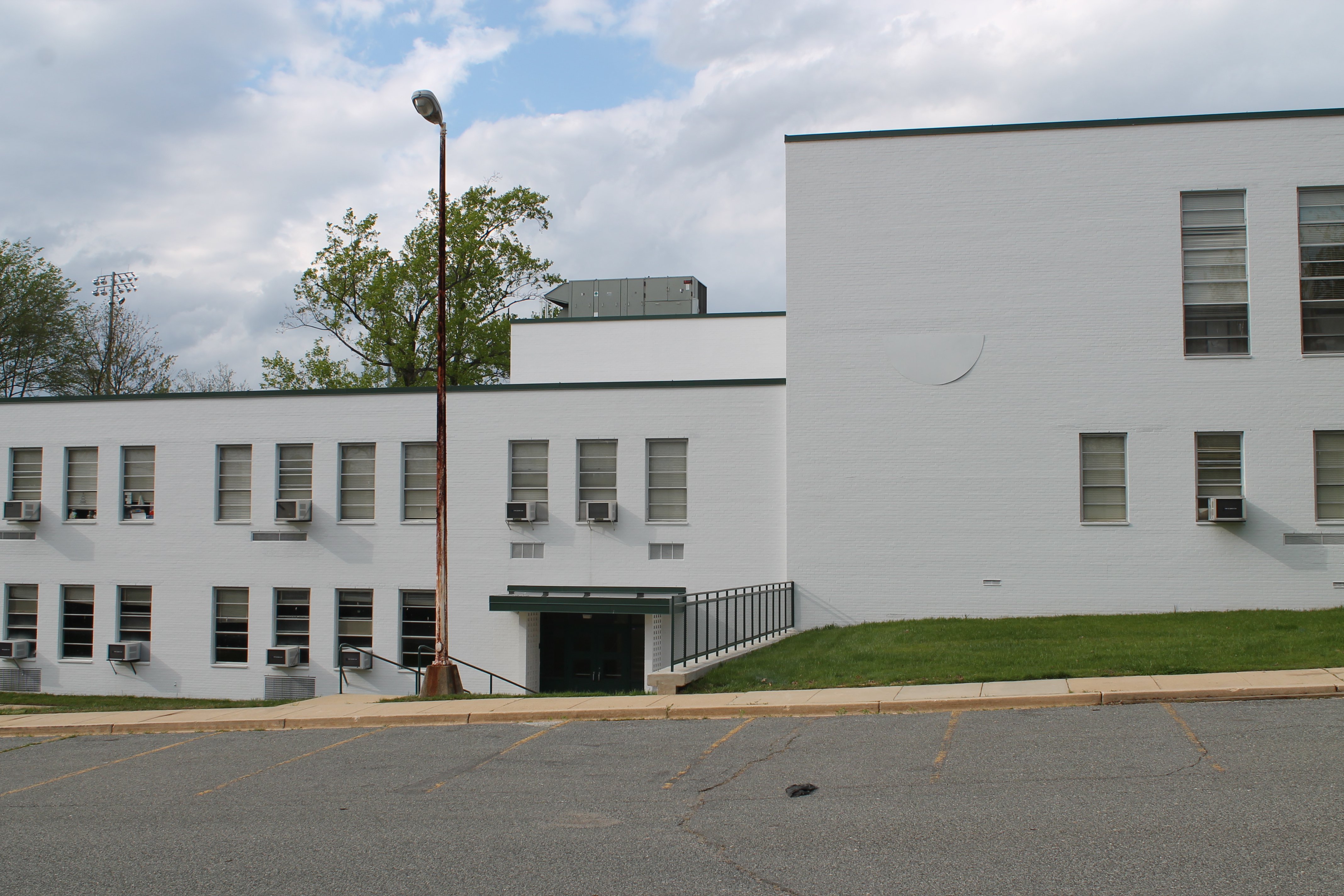
IMG_6353The Master Plan Support Project (MPSP) final report, now available online, details an in-depth facilities assessment conducted during the 2014-2015 school year by the consulting firm Brailsford and Dunlavey. The document reports on the educational adequacy and overall condition of school facilities across the county and includes detailed recommendations for capital improvement projects. Each school is assigned a priority ranking, so that the most urgent needs will be addressed first. The report also recommends 29 school closures and eight new school construction projects1. In all, $8.5 billion of capital improvements projects are recommended over the next 20 years.

Find the Report for Your School

Volume Two of the report contains an Educational Adequacy Field Report for each school built before 1999. Each school’s report contains several pages of notes, scores, and charts evaluating the adequacy of facilities to support learning. In addition, each school’s capacity, enrollment, and projected enrollment are analyzed. (The capacity data is provided for newly built schools as well as those built before 1999.)

Continue reading

Moving the Needle: Six Low-Cost Suggestions for Improving Our Schools

Tommi Makila, a PGCPS parent and community activist, offers his suggestions for improving the school system. The views expressed are the author’s own and do not necessarily reflect the opinions of Prince George’s County Advocates for Better Schools.

This spring we heard that our County Executive, PGCPS CEO, and Board of Education members all wanted to “move the needle” when it comes to our schools and their performance. The prescription offered to achieve this boost was clear: more money and new programs.IMG_6404

I beg to differ with this view. Funding increases alone will not make PGCPS great. In fact, if we don’t change the way we run the school system, no amount of new funding will make a meaningful difference. I believe we could make significant strides just by focusing on what we already do, but doing it better, with minimal additional expenditures.

Of course, it is easy to say that we should run the system better. If we want real improvements, we must be specific in our suggestions. I want to open the conversation by sharing a few no-cost and low-cost ideas to improve our schools:

  • Back-to-school event at every school before school starts: This is all about preparedness from day one and catching parents and students when they are most excited about the upcoming school year. Most PGCPS schools have their only back-to-school event several weeks into the school year. The system-wide Back-to-School Fair at the Show Place Arena may be nice, but it attracts only a fraction of our student and parent population. What we need is an event before the school starts at every single school, as school-specific information is what parents and students want and need the most. Thanks to parent advocacy, for the last few years my son’s school has organized its own Back-to-School Fair right before school starts. According to the principal, it is the school’s best attended event.
  • Timely electronic communications: All schools should have good, up-to-date websites and they should utilize other forms of electronic communications. For example, I have heard from numerous parents that their schools collect email addresses from parents, but never use them. All teachers should have websites or use other electronic communication methods. Improvements in these areas will help both students and parents. How can you expect true parental engagement if parents don’t know what is happening at the school?
     
    This is an area where my son’s school, Accokeek Academy, has made great strides. When my son started at the school, its website was completely static and had badly outdated information. Now the site is informative and updated nearly daily during the school year, and important notices go out through email, text alerts, and social media. Any principal wanting to learn how to do electronic communications should talk to the crew at Accokeek Academy.

Continue reading

Consulting Firm Recommends 29 School Closures and $8.5 Billion Over 20 Years in Capital Improvements

by Genevieve Demos Kelley

Prince George’s County Public Schools should spend $8.5 billion over 20 years on capital improvement projects — including school construction, modernization, and renovation — according to recommendations made by the consulting firm Brailsford and Dunlavey. Recommendations also included 29 school closures.

What is the Master Plan Support Project?

In the fall of 2014, PGCPS began its Master Plan Support Project (MPSP), as part of an effort to optimize its capital improvements. The facilities planning and program management firm Brailsford and Dunlavey was hired to study facility conditions and make recommendations on prioritizing school construction and renovation projects.

Continue reading

The Evolving FY 2016 Budget: The Requested Budget is Not Fully Funded, So What Happens Now?

by Genevieve Demos Kelley

Confused about PGCPS’s evolving FY 2016 budget? Here’s a summary of the budget’s trajectory — and what happens next — with links to the relevant documents and news articles:

Continue reading

County Council to Adopt Budget Today at 1:00; Baker Modifies Plan to Increase Funds for Schools

From the Washington Post, published May 27 2015, reporter Arelis R. Hernandez. Go here for the full story.

Prince George’s County Executive Rushern L. Baker III on Wednesday backed away from a proposal to increase property taxes to generate new money for the county’s troubled public schools, — tacitly acknowledging that he did not have the support he needed from the County Council.

Instead of raising the tax rate by 15 percent, which would have produced $133 million, Baker (D) announced that he would seek $65 million in additional school funding in the budget the council is scheduled to vote on Thursday.


Press release on 5/27/2015 from the office of Rushern Baker.
The Prince George’s County Council will convene session on Thursday, May 28, 2015, at 1:00 p.m. (new time) to adopt a balanced spending plan for Fiscal Year 2016, which begins July 1, 2015.  Budget adoption will take place in the Council Hearing Room, First Floor, County Administration Building, 14741 Governor Oden Bowie Drive in Upper Marlboro, Maryland.
Live streaming of the Budget Adoption will be available and can be accessed by clicking here at 1:00 p.m.  Budget information is available on the County Council FY 2016 Budget web page.

Continue reading

A GCEI Primer: Everything You Need to Know About Maryland’s Geographic Cost of Education Index

by Genevieve Demos Kelley

Much has been made of Governor Hogan’s refusal to release $68 million of the IMG_6467cropGeographic Cost of Education (GCEI) funds. Prince George’s County alone stands to lose more than $20 million in anticipated funding for Fiscal Year 2016. What excatly are GCEI funds, and what does Hogan’s move mean for Maryland schools?

What is the Geographic Cost of Education Index?

The Geographic Cost of Education Index is a supplemental funding program designed to appropriate extra funds to school districts in Maryland with a high cost of educating students. Of Maryland’s 24 local school districts, thirteen have been designated — to varying degrees — as “high cost” school districts and receive GCEI funds. Those thirteen districts serve approximately 80% of Maryland’s public school students. (Read more here.)

Each school district receiving GCEI funds is assigned a predetermined adjustment factor which is multiplied by the per pupil foundation (base) funding amount for that school district, resulting in increased state aid. Prince George’s County’s adjustment is the highest in the state at 0.048 (followed by Baltimore City and Montgomery County), translating into a 4.8% increase in state funding over the foundation amount. (Find the GCEI adjustment, as of 2008, for all school districts in Maryland here.1)

So, is GCEI just a cost-of-living adjustment for school districts with higher home prices and incomes?

No. It’s much more complicated than that. The GCEI’s personnel cost index, which accounts for the bulk of the GCEI adjustment,2 is formulated to reflect the wages needed to attract teachers and other personnel for each district. The cost of attracting personnel is estimated to be higher in school districts that, through factors beyond their control, are deemed to be less desirable. Cost-of-living is a large component here, but the personnel cost index also factors in quality of life and working conditions outside the control of the school district. In theory, for example, a school district with a high cost-of-living and poor working conditions would need to offer higher wages than a school district with a comparable cost-of-living and better working conditions. In other words, tougher school districts need to offer better salaries.

Continue reading

Audit Could Answer Questions About Prince George’s Schools

From the Washington Post, by reporter Arelis R. Hernandez, published May 22, 2015.

For the complete story, go here.

Four years, two superintendents and one bruising state financial report after the Prince George’s County Council came up with the idea, officials are in the last stages of launching a comprehensive performance audit of the school system.

Council member Derrick Leon Davis (D-Mitchellville) sought an audit in 2011, under then-Superintendent William R. Hite Jr., after years of upheaval in school governance left many residents skeptical of how resources were being used.

Continue reading at the Washington Post.

Hogan to Withhold Extra Funding for High-Cost School Systems This Year; Baker Issues Reponse Statement

From the Washington Post, reporter John Hicks, published May 14, 2015. For the complete story, go here.

Maryland Gov. Larry Hogan announced Thursday that he will withhold $68 million in funding for high-cost school systems this year, thwarting the wishes of Democratic legislators and top officials in Montgomery and Prince George’s counties.

The General Assembly passed a measure in April requiring the state to fully fund a program that sends extra money to the state’s costliest school systems.

Continue reading at the Washington Post.

Click here to read County Executive Rushern Baker’s statement in response to Governor Hogan’s decision to withhold the funds.