
by Khadija Bowen
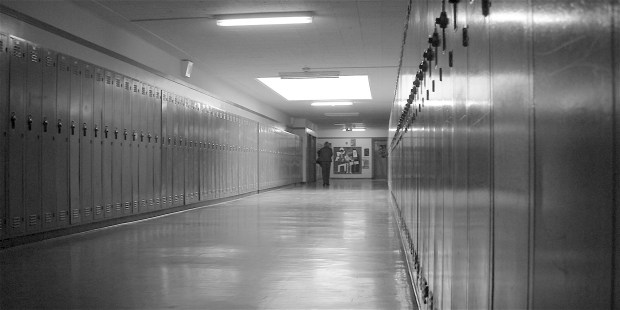
My daughter wakes up at 6:30 every morning. She gets herself ready for school but she does not have to do much, because she has to wear a uniform — plain khaki pants and plain green polo shirt. She cannot make her hair fancy because the school dress code says headbands and other accessories that make her an individual are strictly prohibited. Before she runs out of the house, she grabs her mesh backpack and goes to her bus stop at 7:45. This school only allows clear or mesh backpacks for the children’s own protection. On her hour-and-a-half long bus ride, she must wear ear phones and play music to drown out the chaos and drama around her.
She hopes there will not be a fight, but she cannot tell because of all the noise and horseplay that is happening around her. She gets to school and keeps her head down because that was the advice she was given from older friends that also attended this school. “Keep your head down, try to ignore the drama and stay close to a few good friends,” they told her. Even though there are cameras everywhere, watching their every movement, somehow violence is still prevalent and random locker searches are still necessary. So she continues to follow the instructions and walk to her class hoping there will not be any drama today, but she has lost confidence that this advice will prove useful.
She used to be confident that her inside knowledge was key to navigating the hallways and common areas at this school, but that was prior to her good friend being trampled during an altercation that she was not a part of. Her friend was sent home from school and needed medical attention due to the incident. The young girl returned to school the next day with a boot on her foot. My daughter and her friends followed the instructions but my daughter’s friend still got hurt. Now my daughter wonders, “Will I be next?”
Today, she gets to her classes unscathed, but she is only partially stimulated because either she has a substitute or her teachers are so burnt out that they have lost the enthusiasm to develop stimulating lesson plans. She has had a substitute in English for most of the year, so she knows there won’t be much to do in that class, but she focuses on the instruction as much as she can and completes whatever she is tasked to do. In the past, math has been so unengaging that she and her friends paint their nails or just have side conversations to get through that class period. Finally, the day is nearly complete. After the last bell rings, she finds her iPod again, puts in her earphones, and prepares herself for the hour-and-a-half ride home.
 Picture this: My husband and I wake up at 5 am to get our kids ready for their first day of school. One child attends a charter school more than 25 minutes away from home (in good traffic), and transportation is not provided. Our other child attends school a little closer, but she is in the Talented and Gifted (TAG) program. She is attending her dedicated TAG center, and transportation is provided.
 Have you ever wondered about the foreign language offerings at your local elementary school? Or how your school compares to others in the district?
 Prince George's County Advocates for Better Schools