Buses Running Up to 40 Minutes Late at Prince George’s County Middle School

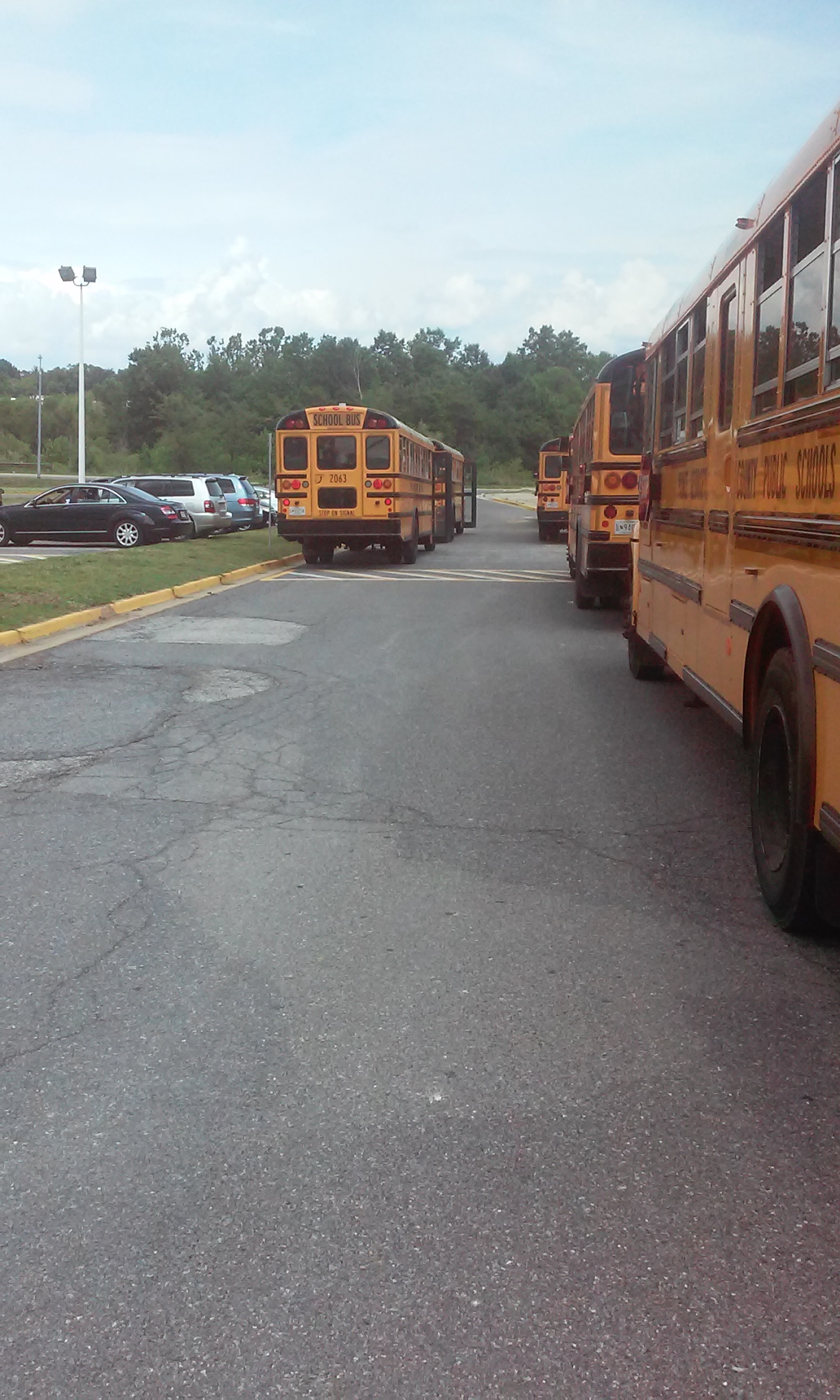
A middle school teacher reports that at her school a significant number of school buses have been arriving late for the afternoon pick-up.

busesSince my planning period (preparation period with no students in the classroom) happens to be the last class of the day, I am automatically assigned to afternoon bus duty. For most of the school  year, there were usually only one or two late buses at my school on any given day. On days with bad weather, perhaps that number would jump to four or five buses.

However, in the past few weeks, these numbers have drastically changed. Of the seventeen buses that service my middle school, only four to eight are on time any given day. Some buses consistently arrive at 4:30 pm, a full 40 minutes after school has ended. In fact, one bus’s new schedule is it to arrive at 4:05 pm (already fifteen minutes after school has ended), run its route, and then come back at around 4:30 pm to run another route.

Continue reading

School Mistakenly Sends Email to Mother Concerned about Mold in the Classrooms

From ABC 7, by Chris Papst, Published on May 29, 2015. Go here for the full story.

TEMPLE HILLS, Md. (WJLA) — A Prince George’s County mom who pulled her child out of school because she said mold in the building was making her daughter sick may be onto something. The 7 On Your Side I-Team obtained a document the district accidentally released explaining how mold could possibly have been in the school.

In this age of spreadsheets and word documents it’s easy to see how someone could send the wrong attachment in an email. But in this case that wrong attachment included information the Prince George’s County School District apparently did not want public.

Eighth Grader Asks Maryland Board of Education for Less Standardized Testing

A Prince George’s County eighth grader testified at a recent Maryland State Board of Education meeting, asking for a reduction in the amount of standardized testing for Maryland students. The opinions expressed here do not necessarily reflect the views of Prince George’s County Public Schools or its members.

My name is Katherine Grace Harness. I am an 8th grader at Kenmoor Middle School. I have been taking standardized tests since second grade. They have become a way of life. However with the addition of the new PARCC test, people everywhere have woken up to the excessive 100_3370amount of standardized testing. We need to reduce the number of standardized tests. Fifty-five out of one hundred and eighty school days are taken up with standardized tests, not counting the unit tests each teacher may give. That means more than a quarter of the school year is taken up with testing. We take at least six different standardized tests.

Standardized tests are used for getting data. This data is not being used for improving student instruction; it merely says if students are on grade level or not. It does not diagnose the problems in the classroom students are having so that teachers can help them. It does not improve education.

Continue reading

Recess: A Thing of the Past?

The following is an opinion piece written by Prince George’s County parent Li’l Dan Celdran. The views expressed here do not necessarily reflect those of the owner of this website, Prince George’s County Advocates for Better Schools, or its members.

My son attends our neighborhood school as a kindergartner this year. As a product of Prince George’s County Public Schools myself, I knew that school would be different for my son: I just didn’t realize hoIMG_6473cropw much. For instance, at the orientation I learned that his school gets only 15 minutes of recess daily (weather permitting). When I attended kindergarten, I went for a half day. We had 30 minutes for lunch, then 30 minutes for recess. We used construction paper, scissors, crayons and glue. We played “house” and dress up. We used blocks to build structures. School was fun.

Now, students don’t go outdoors when it’s snowing, raining or too windy. Instead, they have recess indoors. This may include playing “quiet” games (e.g. board games), free play with manipulatives, or going to classroom “centers” (e.g. library corner, science area, drama-imaginative play). Although he receives regular Physical Education classes, this does not take the place of recess. Recess is a break that would allow children to play (or not play) as they wish. I want my child to have a break from his learning and more time for movement and creative play.

Continue reading

County Council to Adopt Budget Today at 1:00; Baker Modifies Plan to Increase Funds for Schools

From the Washington Post, published May 27 2015, reporter Arelis R. Hernandez. Go here for the full story.

Prince George’s County Executive Rushern L. Baker III on Wednesday backed away from a proposal to increase property taxes to generate new money for the county’s troubled public schools, — tacitly acknowledging that he did not have the support he needed from the County Council.

Instead of raising the tax rate by 15 percent, which would have produced $133 million, Baker (D) announced that he would seek $65 million in additional school funding in the budget the council is scheduled to vote on Thursday.


Press release on 5/27/2015 from the office of Rushern Baker.
The Prince George’s County Council will convene session on Thursday, May 28, 2015, at 1:00 p.m. (new time) to adopt a balanced spending plan for Fiscal Year 2016, which begins July 1, 2015.  Budget adoption will take place in the Council Hearing Room, First Floor, County Administration Building, 14741 Governor Oden Bowie Drive in Upper Marlboro, Maryland.
Live streaming of the Budget Adoption will be available and can be accessed by clicking here at 1:00 p.m.  Budget information is available on the County Council FY 2016 Budget web page.

Continue reading

A GCEI Primer: Everything You Need to Know About Maryland’s Geographic Cost of Education Index

by Genevieve Demos Kelley

Much has been made of Governor Hogan’s refusal to release $68 million of the IMG_6467cropGeographic Cost of Education (GCEI) funds. Prince George’s County alone stands to lose more than $20 million in anticipated funding for Fiscal Year 2016. What excatly are GCEI funds, and what does Hogan’s move mean for Maryland schools?

What is the Geographic Cost of Education Index?

The Geographic Cost of Education Index is a supplemental funding program designed to appropriate extra funds to school districts in Maryland with a high cost of educating students. Of Maryland’s 24 local school districts, thirteen have been designated — to varying degrees — as “high cost” school districts and receive GCEI funds. Those thirteen districts serve approximately 80% of Maryland’s public school students. (Read more here.)

Each school district receiving GCEI funds is assigned a predetermined adjustment factor which is multiplied by the per pupil foundation (base) funding amount for that school district, resulting in increased state aid. Prince George’s County’s adjustment is the highest in the state at 0.048 (followed by Baltimore City and Montgomery County), translating into a 4.8% increase in state funding over the foundation amount. (Find the GCEI adjustment, as of 2008, for all school districts in Maryland here.1)

So, is GCEI just a cost-of-living adjustment for school districts with higher home prices and incomes?

No. It’s much more complicated than that. The GCEI’s personnel cost index, which accounts for the bulk of the GCEI adjustment,2 is formulated to reflect the wages needed to attract teachers and other personnel for each district. The cost of attracting personnel is estimated to be higher in school districts that, through factors beyond their control, are deemed to be less desirable. Cost-of-living is a large component here, but the personnel cost index also factors in quality of life and working conditions outside the control of the school district. In theory, for example, a school district with a high cost-of-living and poor working conditions would need to offer higher wages than a school district with a comparable cost-of-living and better working conditions. In other words, tougher school districts need to offer better salaries.

Continue reading

High Schools Charge Seniors “Mandatory” Fees to Graduate

From the Sentinel, by reporter Michael Sykes, published May 27, 2015.

For the complete story, go here.

As the school year comes to an end, students from high school across the county have walked the stage to pick up their diplomas—but it might have cost them and their families a price to do so.

According to documents obtained by The Sentinel through the Maryland Public Information Act, the school system “requires” all seniors to pay a fee for a cap and gown, while schools also charge “optional” fees for events such as senior banquets, picnics and panoramas.

Continue reading at the Sentinel.

Audit Could Answer Questions About Prince George’s Schools

From the Washington Post, by reporter Arelis R. Hernandez, published May 22, 2015.

For the complete story, go here.

Four years, two superintendents and one bruising state financial report after the Prince George’s County Council came up with the idea, officials are in the last stages of launching a comprehensive performance audit of the school system.

Council member Derrick Leon Davis (D-Mitchellville) sought an audit in 2011, under then-Superintendent William R. Hite Jr., after years of upheaval in school governance left many residents skeptical of how resources were being used.

Continue reading at the Washington Post.

PARCC Testing in a Prince George’s County High School

We’ve been hearing a lot lately about how today’s standardized testing schedules can impact student morale and classroom instruction. However, the problem goes deeper than just the individual student or even classroom. The following is one teacher’s account of how testing works at her local Prince George’s County High School. Individual schools may vary in how they schedule state-mandated exams.

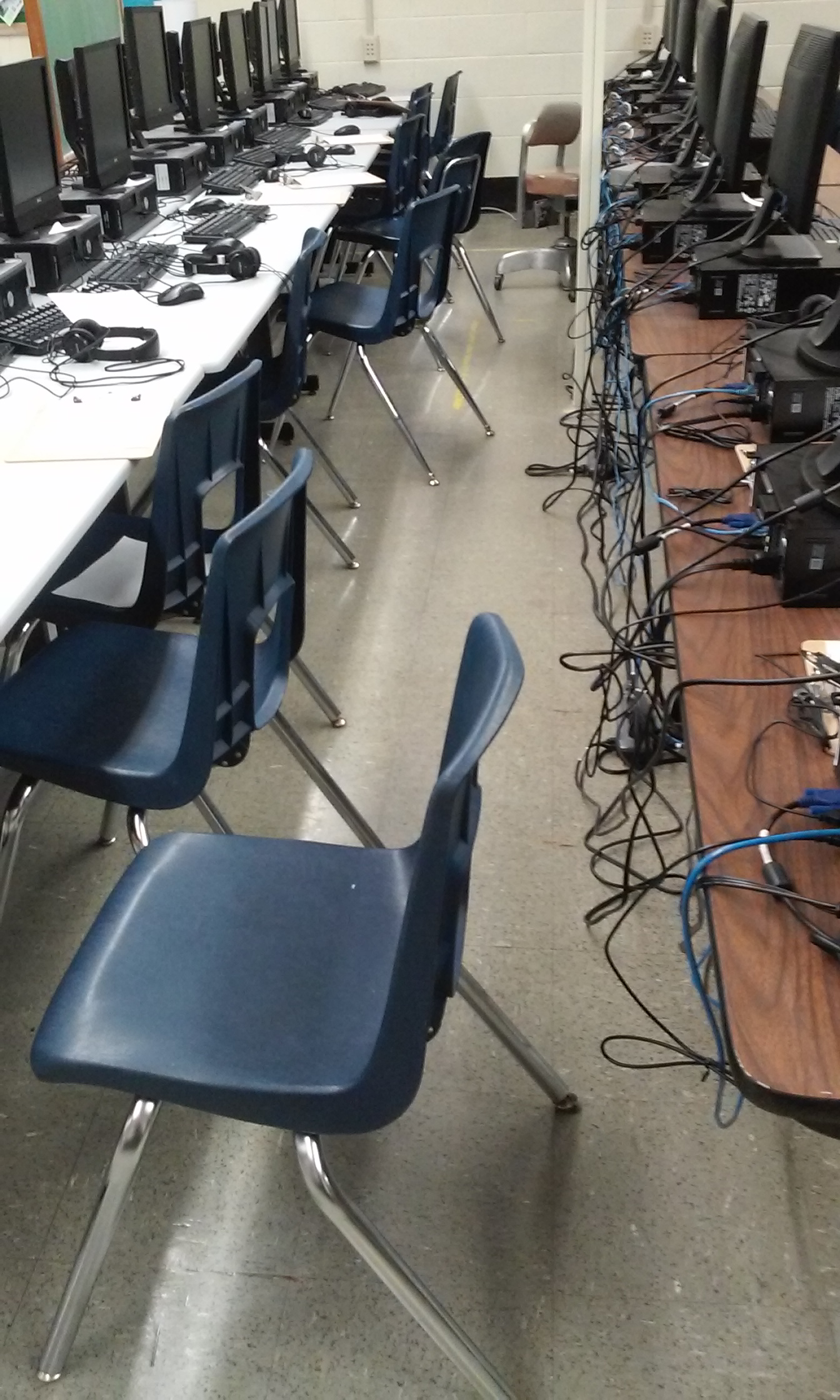
classroomTeaching schedules can affect many more students than just the ones being tested at any given time. Teachers can be assigned to tasks outside the classroom even while their students are not being tested. And because classrooms at the high school level are not necessarily segregated by grade, some students in a given class may be tested while others aren’t. During that time, a teacher has to determine the best way to make sure all her students are being presented with the same material.

Continue reading

Prince George’s Group Offers Support for Parents of Students with Health Needs

The support group Parents of Students with Health Needs recently held a listening session with board of education member Verjeana Jacobs and other PGCPS officials, so that parents could share their experiences.

The excerpt below is from the Gazette, reporter Jamie Anfenson-Comeau, published May 20, 2015.

For the complete story, go here.

Beth McCracken-Harness of Cheverly said that the three years her son spent in and out of school while being treated for a major illness were some of the most difficult experiences in her life.

“There was a time when I couldn’t go to the doctor right across the street without getting a call that my son’s heart monitor was going off,” McCracken-Harness recalled. “It was very isolating. Thank God for the Home and Hospitals teachers who came by.”

Continue reading at the Gazette.