18 Ways to Be an Involved Parent

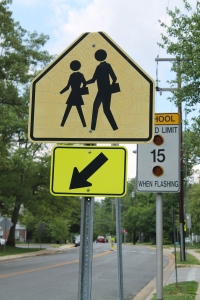
IMG_6326As a parent of a child in Prince George’s County Public Schools, how can you become more involved in the school system? How can you make a difference, both in your neighborhood school and in the system at large? Members of Prince George’s County Advocates for Better Schools came up with this list of ideas:

1. Communicate regularly with your child’s teacher. Be sure to include specific expressions of gratitude and appreciation. Contact the teacher first, before going to the principal or supervisor, if you have concerns about what’s going on in the classroom. You may eventually need to work with your school’s guidance counselor or principal for additional assistance.

2. Get to know PGCPS’s new Ombudsman Office. The ombudsman serves as a neutral party to resolve school-related concerns. The ombudsman office should not be your first point of contact, however. Here is PGCPS’s official “Guide to Addressing Questions and Concerns.”

3. Participate in PGCPS’s online surveys and feedback forms. During the 2015-2016 school year, parent feedback was solicited on several topics, including the school systems’ operating budget, proposed new grading policies, and student safety, for example. Watch for these opportunities on the pgcps.org home page.

4. Sign up for email updates. Go here to sign up for email and text updates. Once you submit your email address, you will be given the option to subscribe to a variety of updates. Besides school closings and delays, you may choose announcements from Board of Education members, monthly newsletters from PGCPS, college and career information, lunch menus, and more.
5. Keep track of grades and assignments through SchoolMAX, and communicate with your child’s teacher if you have questions.

6. Get to know other parents and talk with them about their experiences and ideas. Whether they have found frustration or success as they have advocated for their children, you will learn from their stories, and you may be able to work together for a common cause. You might join one of several Facebook groups for PGCPS parents: PGCPS Education Forum, Parents and PGCPS, and PG Parents for Education are good options.

7. Know who your Board of Education representative is and communicate with them about issues that are important to you. (See this map if you’re not sure which Board District you are in.) Most BOE representatives hold forums, community meetings, or morning coffees at several points during the year. Try to attend one for your district. Even if you don’t have a specific concern to bring up, you’ll learn much by meeting the Board member who represents you and listening to what other parents have to say.

8.  Several times each year, PGCPS holds community meetings on various topics. Attending these meetings gives you a chance to talk to PGCPS officials, meet other parents, and give feedback about the school system.

9. If you really want to know more about how the Board of Education works, attend one of its monthly meetings, or watch online.
Continue reading

Journey to Kindergarten, Part 4

This is the fourth part of a series documenting the steps one family is taking to prepare for their son’s entrance into kindergarten next year. Read Part 1 here, Part 2 here, and Part 3 here.

by Gail Z.

IMG_6404In my last post, I told the story of my unreturned calls to our neighborhood school. I had wanted to tour the school but was unable to get in touch with anyone who could help. I was, however, able to make an appointment to visit the school on the other side of the neighborhood, the school where a number of children who “graduated” from my son’s preschool attend. We are hoping that this schoola TAG schoolwill be an option for us.

On the day of the visit, we were running a few minutes late. Though I called ahead to let the front office staff know, I was a little nervous. I thought, What if we can get into this school, but our tardiness hurts our chances? I quickly brushed that off and instead turned my thoughts to the questions I needed to ask about the school, the schedule, and our chances of getting in.

When we arrived, we were greeted by the school counselor, who would be our tour guide. I thought it was nice that they had a designated person to do this for parents interested in the school.

We walked through the halls, peeking into classrooms along the way. I thought to myself, These children are working and focused, but not stressed or overwhelmed. At one point, we passed students walking through the halls with their teacher. My former-teacher self praised them, in a whisper to my husband, “Look at how on-task they are!” I was giddy, both as a parent and as a former teacher. Maybe it was the sheer excitement of checking out a school for my first-born and imagining the possibilities he’d have there. They offer World Languages at this school, and notebook laptop computers. There’s also a computer lab available so that teachers can bring an entire class at a time! I was pleased. My husband and I were both pleased.

Continue reading

Journey to Kindergarten, Part 3

This is the third part of a series documenting the steps one family is taking to prepare for their son’s entrance into kindergarten next year. Read Part 1 here and Part 2 here.

by Gail Z.

20160406_080252Since my last post, there have been some new developments in our family’s journey to kindergarten.

Back in early March, I made a call to our neighborhood school. Since, as far as I knew, this school did not schedule open houses or group tours for prospective parents, I wanted to set up an appointment to tour the school. I briefly explained to the secretary who answered the phone that I’d be registering my child for kindergarten and would like to come in for a visit. She didn’t sound at all surprised, which actually surprised me, and gave me the feeling that school visits (even to one’s neighborhood school) are a normal thing. She said the principal would call me back (which was also surprising—I would have direct access to the principal?), but that it might be a couple of days. “No problem,” I said. Having taught elementary school, I know how it is.

I figured I’d get a call back that next morning, but it didn’t happen. Each day that passed, I got excited about seeing my son’s potential school, and held out hope that I was somewhere on the principal’s priority list. But apparently, I wasn’t.

After a week had passed, I thought to myself, I’ll give it more time. But almost in the same moment, I thought, she’s not going to call me back.

So I decided to try again.

I spoke to a secretary—the same one, I’m pretty sure—and she said they had been very busy, and that state testing was in progress. In fact, that was the reason that I hadn’t heard anything. The secretary assured me that she would pass along my name and number again. The call ended with my saying, “I understand. Thank you.”

But something didn’t sit right with me when I hung up. I thought about it for a bit, and it occurred to me that maybe I could enroll my son at his neighborhood school (as required by PGCPS) and potentially submit a transfer request before the school year even begins in August. And if that transfer request is accepted, maybe I could send him to that other school— the same one that his classmates from preschool attend—if that’s what we choose.

Continue reading

What is the Parent and Community Advisory Council?

by Lori Morrow

What does parent engagement mean to you? When my son started kindergarten eight years ago, parent engagement meant walking him to class each day, assisting during class parties, and occasionally volunteering at a PTA event. Over the years, my level of involvement grew as I took on the role of PTA President during my son’s 2nd and 3rd grade years. I began to attend school board meetings and hearings, and I became a familiar face to many of our local elected representatives.  Now with children in elementary and middle school, I am reminded daily that parent engagement shifts as our children mature and become more independent. I no longer walk my 7th grader to class, but it is still important to communicate with his teachers and understand how his school functions.

Last fall, after 8 years of involvement and advocacy, I was nominated for the PGCPS Parent and Community Advisory Council (PCAC) by my Board of Education representative, and in March of 2016, I received my official appointment letter to a 2-year term on the council.

Established by PGCPS Board Policy 1500, the Parent and Community Advisory Council serves as one of three advisory groups to the Board of Education. Members are

Officially the PCAC is tasked with providing “counsel and advice on issues pertaining to student academic achievement, parental and community engagement and public perception of PGCPS.” That leaves a lot of latitude for the Council Co-Chairs and members to set priorities and topics based on the current issues in our school system. Recent topics of discussion include specialty programs, Parent Engagement Office initiatives, communication about school consolidations, and school safety.

The Council meets monthly with Board of Education Chair Dr. Segun Eubanks, Board Member Curtis Valentine, and staff from the Parent and Community Engagement and Board of Education offices. Meetings are held on the second Monday of the month at 6 pm in the Sasscer Administration Building, in the small room that adjoins the Board Room. Meetings are public; guests are welcome to attend and observe meetings, but space is limited.

Continue reading

Please Send Us Your Stories

100_3401We want you to write for us! Send your original content to Genevieve Demos Kelley at pgcabschools@gmail.com. If we like it, we’ll publish it on this blog.

Your story may fall into one or more of the following categories:

  • Opinions. (Go here, here, and here for examples.) Opinion pieces must take a respectful and reasonable tone and must be grounded in documented evidence. Constructive criticism of ideas, policies, and practices is welcome; character attacks are not.
  • Personal narratives. (Go here, here, and here for examples.) We want to read about your experiences — good and bad — with Prince George’s County Public Schools. Stories should not focus on one particular school, unless the narrative is instructive for the larger PGCPS community. Some pieces are a mix of story telling and opinion (like this one, for example). That’s fine.
  • News, information, and analysis. (Go here, here, and here for examples.) Almost any topic is fair game, as long as it is directly tied to PGCPS and follows the guidelines below.
  • Positive pieces. (See here, here, and here for examples.) We love publishing stories that put our schools in a positive light. Keep the good news coming.

Some points to keep in mind:

Continue reading

Asking for a Culture of Kindness in Our Schools

by Christine D.

20151113_152926This morning as I brought my daughter into school, I saw a boy pulled aside by the teacher supervising the arrivals. He had been pushing the smaller children on the way through the door, it seemed, and was being spoken to in no uncertain terms. Another parent nodded in approval and said that he had also been pushing on the bus. He was in big trouble.

I didn’t see whether he was pushing in thoughtlessness or exuberance or out of a desire to hurt the smaller children, but I think the last is the least likely. Obviously, moving him to the side was a good way to resolve the issue for the moment. Speaking sternly to him about it was probably seen as the best way to ensure he might think twice about doing it again tomorrow.

I walked my daughter down to her classroom. When I came back up the corridor, the same teacher was just finishing off a diatribe to the same boy. I heard her end brusquely with “And there’s no need for crying. Now go to class. Go on.”

The boy shuffled slowly away from her and towards me, being passed by faster, happier children, his face a mask of misery. He wiped his eyes with the sleeve of his coat. He looked utterly downtrodden. My heart broke for him: I wanted to hug him and tell him it would be okay, that he’d remember to be gentle with the smaller children tomorrow and that school isn’t a place where people just yell at you and assume you’re being bad on purpose. He didn’t know me, though, so all I did was touch his shoulder as I passed.

Continue reading

Thoughts After a Boisterous Hearing on School Closings and Boundary Changes

by Tommi Makila

The views expressed are the author’s own and do not necessarily reflect the views of Prince George’s County Advocates for Better Schools.

The Prince George’s County Board of Education’s Public Hearing on Boundary Changes and Proposed School Consolidations on February 23, 2016 was an amazing and wild affair. If you were not able to attend the hearing, you may view a recording of it online.

The hearing was eye opening and thought provoking. The issues that generated the most comments were the proposed closures of Forestville High School and Skyline Elementary, as well as boundary changes in the Accokeek and Fort Washington areas.

As I was sitting at the hearing, many thoughts came to mind. It is hard to organize those feelings into a chronological narrative, so I am providing the following rather random list of thoughts:

  • CEO Kevin Maxwell did not attend the hearing. Yet, since 2013, when the school board was restructured (see Maryland House Bill 1107), it is the CEO — not the Board of Education — who has authority to close schools. Moreover, it was the CEO who introduced these proposals for school consolidations and boundary changes (see p. 17 of this document) to the Board of Education. It was a surprise not to see him there.
  • Sometimes people power works! The hearing was one of the most powerful public hearings I have ever attended—powerful enough to push the BOE to postpone all boundary decisions until next year. But residents and parents only seem to get involved when these kinds of drastic problems come up, issues that dramatically impact their children and families. In many ways this is natural, but we need to be engaged at other times too.
  • We need to keep the needs of our students first and foremost. The Skyline Elementary closure proposal was the most striking example of student needs getting lost in the shuffle. Skyline has a large population of autistic kids, and parents convincingly argued that the school provides high-quality services for them. Testimony from the Skyline parents was heartbreaking. It is obvious that we must find a way to maintain the existing special services for these kids.
  • Schools are important for communities. When we are looking at school closures or major boundary changes, we must work with the impacted communities and always try to find community solutions. Try to keep Accokeek students in Accokeek, Ft. Washington kids in Ft. Washington, Forestville in Forestville, and so forth. I believe that for local schools, strong community support and school pride are factors in their success.
  • When looking at school closures and boundary changes, central office personnel comes up with solutions that look fine on their spreadsheets and maps. But they may not be such great solutions for the people impacted. It is the responsibility of the CEO and Board of Education (BOE) members to work with communities to really understand all the issues and find the best solutions.
  • The process for handling these issues—school closures and major boundary changes—must be longer. While some community hearings on these issues were held in early December 2015, no specific plans were shared at that time. The first time actual proposals were made public was when the CEO presented his recommendations at the January 21 BOE meeting. The public hearing was held on February 23, and the BOE vote was originally scheduled for February 25. Considering the impact these changes have on communities, the process must be much longer and entail significant outreach and collaboration with local communities.

Continue reading

Prince George’s County Parents Speak up About Recess

The following opinion was presented by LaShayla Clark, one of four Prince George’s County parents who spoke during the public comment portion of the February 25, 2016 Board of Education meeting about the need for longer recess. You may view Ms. Clark’s comments beginning at 1:21:58 in the video below.

Good evening. Thank you for the opportunity to speak about the topic of recess. Two and a half years ago, my husband and I decided to move our family from Georgia to Maryland with the hopes of our children receiving a high quality education. Despite what we heard regarding education in Prince George’s county, we looked for a school that was ranked high and bought a home a little over a year ago. I have three small children, a four year old, a two year old and a 7 month old. My oldest will be starting school this fall.

Recently, my eyes have been opened to a number of issues that reside with our county’s school system. Many of the families that I have met here are planning to home school their children or send them to private school. One of those parents who send her children to private school said, “Our children will be done with school by the time they fix everything.” Nevertheless, I believe that my children can and will receive a great education in Prince George’s County and so I am here to ask you to consider research based policies for our school system.

It was while visiting schools, that I asked an administrator how much time the students have for recess. She told me 15 minutes. I was in shock. She went on to say that Prince George’s County schools require 15 minutes. I have since learned that each school has an option to allow up to 30 minutes of recess a day. However, many schools only provide the minimum. I recently spoke to a principal in Prince George’s County who increased the time of recess at her school. I learned a couple of things in my conversation with her. One is that she wants what is best for all of her students. Two, she wants her school to aim for the Bronze level for the Healthy Schools Program, which encourages at least 20 minutes of recess per day.

Continue reading

Skyline ES Parents Fight to Keep Autism Program, School Open

by Genevieve Demos Kelley

Parents of children in the autism program at Prince George’s County’s Skyline Elementary School gave emotional testimony during last night’s Board of Education meeting.

Below, I have noted the points in the board meeting video where each parent who spoke on behalf of their autistic child began their comments. I have also included a few sentences from each parent’s testimony.

Continue reading

HB 1107: Putting Last Night’s Five-Hour Board Meeting into Context

by Lori Morrow

Last night, I attended the PGCPS Board of Education Meeting to hear the members vote on the CEO’s Proposed Operating Budget. The five-hour meeting provided an interesting glimpse into our local county politics. (Click to watch Part 1 and Part 2 of the video of the meeting.) Nearly two hours of the meeting were spent listening to students, parents and community members discuss the impact of recommended school closures and consolidations in southern Prince George’s County. Having faced a similar situation in my Tulip Grove Elementary School neighborhood years ago, I empathize with those families and understand how frustrating the uncertainty can be. As yet, no final decisions on school closures have been made.

A comment I heard multiple times was that the Board Members are elected by us.  However, since House Bill 1107 passed in the 2013 Maryland legislative session, that is not entirely true. HB 1107 changed the structure of the Board of Education and made changes to the position of chief executive officer, formerly known as superintendent of schools. The impact of those changes was evident last night.

Nine of our Board of Education members are elected, and four are appointed by the County Executive.  Moreover, the Board needs a 2/3 majority to override a decision of the CEO, other than a personnel decision. HB1107 also transferred many powers directly to the CEO, appointed by the County Executive.  Under the new law, the PGCPS Board of Education is charged with only two responsibilities: 1. Raise the level of academic achievement of the students in the Prince George’s County Public School System; and 2. Raise the level of engagement of parents, students, and community as a whole. Other responsibilities, including school closures, belong solely to the Chief Executive Officer. It is an important distinction, as the voter’s influence in choosing the CEO comes from our election of the County Executive rather than the Board of Education.

Continue reading