PGCPS Grappling with Large Number of Teachers on Administrative Leave

IMG_6404The views expressed are the author’s own and do not necessarily reflect the positions or opinions of Prince George’s County Advocates for Better Schools.

by Justine C.

In response to the horrific incidents at Judge Sylvania Woods Elementary School and the resulting Prince George’s County Public Schools (PGCPS) Student Safety Task Force Final Report (completed May 2016), the PGCPS administration revised Administrative Procedure 5145 “Reporting Suspected Child Abuse and Neglect” in August 2016.

According to Dr. Kevin Maxwell in an email to me dated January 18, “added emphasis was placed on the training of all employees to ensure that as a district we are providing the safest possible atmosphere for all students.” Maxwell continued, “while the large number of reports that have been generated as a result of the renewed emphasis on training, could be viewed as an unintended consequence, it only takes one incident, to one child to demonstrate how important it is for us as a district to remain diligent in this area.”

It’s hard to argue with that.

But I believe that PGCPS needs to be honest that there has been a significant overcorrection and that this is negatively impacting classrooms and students across the county. In fact, it was reported at a public meeting with PGCPS officials hosted by our local PTA on February 1 that Child Protective Services (CPS) has told PGCPS that many reports are not abuse and are not even reportable offenses. I can attest to how disruptive the procedures changes have been.

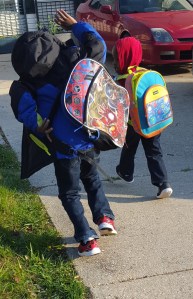
During the fall and winter of this school year, one of my child’s teachers had to take an extended period of family leave. This resulted in the class having a number of different substitutes of varying temperaments and abilities. There was general confusion on a daily basis about whether or not there would even be a substitute for that day. The lack of continuous instruction meant very little material was covered. If a substitute did not pick up the job for the day, students in the affected class were given a packet of work and sent to sit in other classrooms. When a 9-year-old bemoans the fact that they aren’t learning any math, you know that there is a problem.

Just prior to the winter break, my other child’s teacher disappeared. After parent inquiries were made, it was discovered that the teacher had been placed on administrative leave pending an investigation. Again, the students were subject to the vagaries of the substitute teaching pool. Other staff had to develop lesson plans based on the curriculum, grade papers, and input grades into School Max, in addition to their regular duties. And once again, students recognized that the worksheets they were doing were in no way equal to the exciting projects, lessons, and differentiated instruction they had previously enjoyed.

How did this situation evolve?

While I am still somewhat murky on the details of how reports regarding child abuse are made and what the county considers to be abuse, it is clear that these investigations take a significant amount of time due to the sheer number of offices involved. A report goes directly to CPS, who must investigate and give their findings to PGCPS’ Security Services. Employee Relations must also make a determination, and then the area instructional leader and principal weigh in on the outcome.

A Maryland Public Information Act request revealed that as of January 31, 2017, there have been 296 teachers placed on paid administrative leave for the school year, and as of that date, 160 remained on paid administrative leave. At the February 1 PTA meeting, Cesar Pacheco, Assistant Director of Security Services, stated that his office currently has nearly 700 pending cases pertaining to staff throughout the system. This reflects a marked increase from seven years ago when the office handled 250 cases for the entire year.
Continue reading

More Questions Answered on FY 2018 Budget

A previous post featured budget-related questions from the community, along with answers prepared by the Office of Budget and Management Services, under the direction of John Pfister. These questions were submitted in advance of the Jan 23 PGCPS Budget 101 Event, co-sponsored by PGCPS and Prince George’s County Advocates for Better Schools.

Five additional questions, submitted after the Budget 101 Event, and their answers, prepared by the Office of Budget and Management Services, are found below (and available in PDF format here). It may be helpful to refer to the proposed Operating Budget for Fiscal Year 2018, found here.

1. Are total budgets and/or school based budget amounts per each school available anywhere? Either proposed amounts for next year or actual amounts for the current year. It would also be interesting and helpful to see actual per student funding for each school.

The school based budget for each Prince George’s County public school is available on our website at:

http://www1.pgcps.org/sbb/sbb2017.aspx

2. What exactly will the proposed charter school program expansion entail (37.6 FTE, $3.9 million additional funding)?

The FY 2018 proposed budget includes $3.9 million and 37.60 FTE to support existing charter school enrollment increases and the expansion of grade levels at the following Charter schools:

  • Chesapeake Math and IT Academy (6-12) – adding 10th Grade
  • College Park Academy (6-12) – adding 11th Grade
  • Imagine Foundations Phase II (Morningside K-8) – adding 8th Grade

3. There is a significant proposed increase for the per pupil allocation for charter schools (page 71 of the budget document), from $9,812 to $12,977. What explains this?

The overall increase in the per pupil allocation (PPA) for charter schools is directly related to the $122.6 million budget proposal for FY 2018. Although this is a proposed budget, the Charter School – Per Pupil Allocation Formula takes this amount into consideration when projecting the FY 2018 allocation. The PPA will be revised based on the Board’s requested and approved budgets.

4. PGCPS spends over $50 million per year to send students to private schools. I believe this is for special needs students. Has there been an evaluation if it would be more cost effective for PGCPS itself to provide at least some of these services?

The non-public budget for PGCPS is $53 million. In an effort to address this area of concern, PGCPS’ Department of Special Education conducted an analysis of the disability categories served in non-public schools in FY 2016. The analysis was conducted to determine which disability categories are predominately served in non-public schools. Results indicated that, of the 847 students served in non-public schools, 39% had a specific learning disability. The data indicated that these students are served in non-public schools to address their needs in the area of reading. In an effort to address this concern, the Department of Special Education is in the process of examining the use of appropriate reading interventions to ensure students with deficits in this area can be served within the school system.

In addition, due to the rising increase in the number of students with autism, the Department of Special Education is preparing to consult with a national expert to develop and design services to address the needs of students with significant cognitive and behavioral needs. This multi-year plan will enhance and expand access to services within the school system.

5. At the Budget 101 session, it seemed somewhat unclear what the budget plan for building maintenance is. Is there an overall increase or decrease in building maintenance expenditures? Which specific line items related to building maintenance are being adjusted and what is the reasoning for those changes?

In the FY 2018 proposed budget, there are two significant increases in the overall budget for Building Services. The line item for Maintenance Supplies was increased as well as the line item for Overtime. Both of these increases were made to reflect historical spending levels.

You may find the first set of community questions and answers regarding the FY 2018 Operating Budget here

Every Comment From the Jan 24 Budget Hearing

by Genevieve Demos Kelley

The Prince George’s County Board of Education held its first public hearing on the fiscal year 2018 operating budget on January 24, at Charles Herbert Flowers High School. A Board of Education budget work session immediately preceded the hearing.

Fifteen members of the public spoke at the hearing. Their comments are recapped below:

  1. At 1:45:23 in the video, special educator: Increase the amount of funding for special education beyond what is proposed in the budget. “Special educators are leaving the county and field of special education in droves.” Special educators spend twelve to fourteen hours a week on legally required compliance paperwork. “Time spent on compliance paperwork is time spent out of the classroom and away from servicing our students.
  2.  At 1:48:02, special educator, paraprofessional in autism program: Adequately budget for our special education and autism programs. Our special education programs are not adequately staffed to safely manage the students. Special educators are close to burnout. “How many times must I document that a student ran away or tried to throw himself down the stairs before an additional staff person is approved? Also, when a specialist comes to observe our students to assess staffing or proper placement, why not have him or her actually do the job for an entire day instead of making an assessment based on a 15 or 20 minute slice of time?”
  3. At 1:50:57, special educator: It has become increasingly hard to do the job without adequate staffing. Describes a “day in the life of a special education teacher,” including assessing newly referred students to special education, writing IEPs, preparing paperwork for meetings, collecting data, collaborating with teachers, completing follow-up paperwork for IEP meetings, writing progress reports, providing assessment accommodations for students, as well as general school duties such as lunch duty. It is often necessary to spend several hours over the weekend working on
  4. At 1:53:42, special educator: “Special educators often fulfill two distinct jobs: We’re case managers, and we’re specialized instructors. However, we only have 45 minutes of planning time to fulfill these dual roles. . . .The overwhelming amount of time required to complete paperwork diminishes the amount of time that we have to provide supports in the classroom, with less specialized instruction for students with disabilities. . . I’m here today because so many of my colleagues leave the field of special education each year, due to the overwhelming pressure of compliance, as paperwork often becomes a priority over teaching.” Increased special education funding is needed for additional special educators, instructional specialists, and IEP clerks.
  5. At 1:56:43, parent of 9th grader at Bowie High School who has recently transitioned from private school: “As my daughter complained about sweltering classrooms at the start of the school year and frigid classrooms last month, I have to ask, is academic excellence really a priority? As my daughter has had a substitute teacher for science the entire semester and about three weeks for math, I must ask, how can we expect her to excel on the standardized tests . . . ?” Pay attention to a hierarchy of needs. There are tough choices to be made. Should such items as culture training for teachers (at around $610,000) and additional world languages funding ($1.2 million) compete for basic needs such as heating and cooling, or instruction in math and English?
  6. At 1:59:45, parent of a 5th grade Heather Hills Elementary student: There is confusion surrounding next year’s placement of some rising middle school Talented and Gifted (TAG) students from Heather Hills Elementary. Students who had anticipated attending the TAG center at Kenmoor Middle School next year received a letter stating that they must enroll in the TAG program at Benjamin Tasker Middle School instead. However, there has been no other mention of a TAG center at Benjamin Tasker Middle School. After numerous phone calls, parents were able to learn nothing about a potential TAG center at Tasker. The request is that students should be permitted to remain at Kenmoor until the TAG center at Tasker is fully operational.
  7. At 2:02:24, community member and parent of PGCPS alumni: Was hired in 2011 as a senior purchasing specialist, and subsequently discovered and reported waste, fraud, and abuse in the school system. The Strategic Plan implemented in 2016 and scheduled to go through 2018 does not actually address the goals of academic excellence, high-performing workforce, safe and supportive environments , family and community engagement, and organizational effectiveness. “How is it that we have a plan that went from 2016 to 2018, and you have not shown us any data or statistics that support what you’re doing?”
  8. At 2:05:25, community member and “watchdog advocate”: The budget document contains several discrepancies, and it is difficult, in some cases, to track where the money is going. For example, 17 Full-Time Equivalent (FTE) positions are listed at a cost of $2.8 million to develop the Strategic Plan and obtaining grants in support of the plan.
  9. At 2:08:13, student at Whitehall Elementary School: School lacks adequate heating. “It is hard being so cold in my classroom. Sometimes when I write, I shiver . . . It can be hard to take tests too, because all I can think about is how cold I am.”
  10. At 2:09: 14, PTA president at Whitehall Elementary School: There are currently 833 open work orders related to heat for the 208 schools in the county. Whitehall’s heat is not working properly, even after months of requests for repairs. Classroom temperatures have been documented to be as low as 49 degrees, and kids are wearing coats and long johns in the classroom. Whitehall Elementary is overenrolled, with 576 students at a school that has a capacity for 420 students. “Please consider allowing room in your budget to repair so many of our buildings that our failing your scholars. You cannot continue to have high expectations academically while requiring such low maintenance standards of yourselves.” 

Continue reading

FY 2018 Budget Questions Answered

Monday’s budget information session was a lively event, with more than 50 attendees and a slew of questions about funding for such areas as maintenance and repairs, Pre-Kindergarten education, Student Based Budgeting, and transportation. In advance of the event, the Office of Budget and Management Services, under the direction of John Pfister, prepared answers to 29 questions that members of the community had submitted.

The questions and their answers are found below (and available in PDF format here). It may be helpful to refer to the proposed Operating Budget for Fiscal Year 2018, found here.

1. Is there any increase or decrease in the amount of funding proposed for home and hospital tutors and/or one-on-one aides?

There has been no request to increase or decrease in the level of funding for home and hospital tutors for FY 2018.  To date the funding level is projected to remain the same as FY 2017.

2. Is special education instruction receiving additional funding under the proposed budget?

Yes, there was an increase of $2.6M in Special Education for FY 2018. This increase in funding for Special Education will provide supplemental resources such that budgeted amounts will support anticipated costs based on prior year expenditures. 

3. How much is budgeted to pay substitute teachers and how does that compare to prior budgets?

The FY 2018 Proposed Budget contains $16.8 million for substitute teachers as compared to $17.4 million for the FY 2017 Approved Budget and $19.7 million for the FY 2016 Approved Budget.

4. The Budget in Brief Document reflects a decrease in Federal funding in the amount of $6,493,626. Is this the loss of head start funding? Is there funding included in the proposed budget to make up for the lost federal head start funding? What’s the earliest that this funding could be restored from the federal government?

The decrease in Federal revenue of $6,493,626 in the Budget in brief reflects the loss of funding for the Head Start program. There is no funding in the proposed budget to replace the federal Head Start program funds. However, current students in the Head Start program will be absorbed into the district’s existing Pre-K program at a cost of $5.1 million and require additional staffing of 68.0 FTE. If the district were to seek Federal funding for the Head Start program, application for the funds would have to occur by May 1, 2017 and would cover the time period of August 1, 2017- July 31, 2018.

5. Focus Area 1: Academic Excellence includes Diversity Specialist & Supports at a change of $289,568. Does this represent the salary of one person?  How much of this is salary, not including benefits?

The Diversity Office increased by 1.0 FTE under the Interpreting and Translation Services. The FY2018 Proposed budget includes a 1.0 FTE for an ELL Family Engagement Specialist at an estimate cost of $ 76,608 plus $ 30,975 in benefits. Interpreting and Translation Services proposed an increase of $ 181,985 to support existing contracts for translation. Language Links and Transact need additional funds due to increased use.

6. Focus Area 2: High-Performing Workforce: What is a Mentor and Peer Assistance & Review (PAR) Teacher? (7 FTE’s, $813,775)

The Mentor and Peer Assistance & Review (PAR) Teacher includes Mentor Teachers to provide coaching, demonstration lessons, shared lesson planning and professional development sessions for teachers with a focus on Framework for Teaching. COMAR regulations (13A.07.01) recommends a maximum ratio of 15:1 (mentees/mentors), and this additional staffing will allow PGCPS to get closer to meeting that recommended ratio. The Peer Assistance and Review (PAR) program uses expert teachers to provide regular, consistent support to struggling new teachers to ensure their future success in the classroom.

7. Communication Specialist (Board of Education), $140,423 – Is this a newly created position?

The Communication Specialist in Board of Education Office is a newly created position proposed for fiscal year 2018.

8. Overtime supporting services $6,000,000. Please describe what this pays for? How does this compare to the amount spent on this expenditure last year?

The FY 2018 Proposed Budget includes $6.0 million to support overtime in the division of Supporting Services to align the budget closer to historical expenditure levels.  This brings the total appropriation for all funds for FY 2018 to $9.1 million.   These funds are to support overtime for Transportation, Maintenance and Plant Operations.  Overtime within these departments has been increasing due to absences, mid-day runs and additional routes. Expenditure for FY 2017 were $12.1 million. Management is researching alternatives to reduce overtime usage in the future.

Continue reading

PGCABS to Host Budget Q & A Session

by Tommi Makila

Budget season for Prince George’s County Public Schools is in full swing. The CEO’s proposed operating budget for Fiscal Year 2018 is now available on the PGCPS website. If you don’t have time to read the whole budget, consider reading the introduction, which includes specific changes in expenditures compared with last year’s budget (p. 16-19), as well as information on capital improvement projects (p. 20-24).  A less-detailed Budget in Brief document is also available.

Prince George’s County Advocates for Better Schools (PGCABS) is hosting, in collaboration with PGCPS staff, a question and answer session about the proposed operating budget on Monday, January 23 at 6:30 pm at Ernest Everett Just Middle School. This will be an excellent opportunity for interested residents to pose questions to the PGCPS budget office staff about the proposed operating budget. PGCABS hosted a similar Q&A session on the budget last year.

Questions about the budget can also submitted in advance of the meeting by clicking here (or send an email to pgcabschools@gmail.com). PGCPS budget staff will prepare answers in advance of the meeting. Emailed questions need to be submitted by Monday, January 16.

The Board of Education will host three public hearings during which residents will have an opportunity to comment on the CEO’s proposed budget. These hearings will be held on January 24, January 31, and February 7, at 7 pm. To sign up to speak at the hearings, call the BOE office at 301-952-6115. Each speaker will have three minutes to make his/her comments.

Journey to Kindergarten: We’ve Arrived!

This is the sixth part of a series documenting the steps one family is taking to prepare for their son’s entrance into kindergarten next year. Read Part 1 here, Part 2 here, Part 3 here, Part 4 here, and Part 5 here

by Gail Z.

20160406_080252 (1)We’re nearing the end of 2016 already, and are moving into the second part of the school year. It’s flown by so fast, but we are enjoying — and surviving — kindergarten!

Our son has adjusted well. He loves his teacher (she really is great), he has some favorite classes (computer and P.E.), and he is doing really well. We are just as pleased today as we were when we visited the school back in the spring. Here are some of the reasons why:

  • It’s run like a well-oiled machine. From weekly parent communication folders used to send home everything from important calendar dates to information about community happenings, the school’s superstar staff has not missed a beat. And speaking of staff…
  • Every encounter with staff has been positive. I have called and visited the front office, emailed my son’s teacher, walked into the building unsure where to go and have always received a pleasant response/answer.
  • They host wonderful events. My husband ranted and raved about Danishes for Dads, a program held one morning in October to honor the men in the student’s lives. Our boy surprised my hubby by reading a few sweet sentences he’d written about him.
  • An Active PTA. So far, there have been two dances, a book fair, a holiday gift shop, a fundraiser, and Chick-Fil-A and Chuck E. Cheese night. I love that there are parents like me who are so actively involved.

We are so happy and blessed to be having such a wonderful experience thus far. We look forward to watching our boy grow and mature in his time at his new school and will be looking forward to his brother joining him there in just a couple of years.

Our Transition from Private to Public School

by Llew B.

file_000Make no mistake, parents are having tough conversations about school choices this time of year. It was no different for my family last fall when discussing options for my daughter, who at the time was in 8th grade and beginning her 6th and final year at a parochial school in Bowie. Fast forward to 2016, and we’re a couple of months into her transition to Bowie High School (BHS). I’m writing to share my own thoughts on my daughter’s transition and suggestions for middle school parents and Prince George’s County Public School (PGCPS) officials.

Why We Chose Public

Financial considerations were a primary factor in our decision to transition from private to public high school. Yearly tuition for private high school tends to be substantially higher than it is for the middle grades. A family could easily spend $60K for high school over four years, compared to $30K or more in middle school, over the same time period. Furthermore, our second child would enter high school in my daughter’s junior year, and we assumed there would again be a period of overlap in college.

We engaged in a number of information gathering activities to help us make a more informed decision. To better understand public school options, we investigated specialty programs for highly motivated students (ex. Summit at Bowie High), toured the facility for 9th grade students at BHS, and met with several BHS students and their parents. Our key findings were not surprising. We did not discover a treasure trove of gleaming facilities, but we didmeet staff and parents with similar goals. The students we spoke with described experiences that were fair to positive, and we heard no anecdotes that were cause for alarm.

Last but certainly not least, there was an element of hope for potential improvement in our public schools, over time. Through Prince George’s County Advocates for Better Public Schools (PGCABS) and other venues, I began meeting people interested in public school advocacy, and I interacted with various levels of PGCPS administrators who seemed to welcome outreach from people in the community.

The Transition

We’re only two months into the high school journey, but my daughter is doing fine. Below I provide comments ranging from the social environment to academics.

Social environment

High on the list of factors that impact the adjustment to high school is the ease at which a student makes new friends. While the majority of 9th grade students appear to come from the public middle schools that feed into BHS, it appears that a sizeable number of students are new to the area and my daughter has made a number of friends from this pool. Also, school spirit seems to be fairly high from what I gathered while volunteering during homecoming week.

Transportation

I’m pleased to report that we have had no significant issues with transportation. I’m aware that transportation issues are a major concern for students county-wide.

Safety

The environment seems to be safe and orderly. My daughter has stated that in most of her classes, students actively participate and there is minimal disruption to the daily routine.

Continue reading

Four Ways to Reduce Disruption When Teachers are on Long-term Leave

IMG_6404Earlier this month, the Washington Post reported that at least 250 employees of Prince George’s County Public Schools are on paid administrative leave due to allegations of inappropriate conduct. At the October 25 Board of Education meeting, a PGCPS parent presented these suggestions for how to minimize the disruption to instruction amid an unprecedented number of teachers out on administrative leave. The opinions and views expressed are the author’s own.

by Cicely L.

Parents, kids and school leaders are scrambling to deal with the unprecedented number of teachers on administrative leave. Since it does not appear this problem is going away anytime soon, it is time for PGCPS to be proactive rather than reactive, and find ways to ease the transition for everyone involved. So here are 4 suggestions that may help…

1. Give parents relevant information about who is taking over the class when a teacher is on administrative leave.

It is helpful to know the name of the long-term substitute, but it is equally important to know how we can get in touch with them. Provide an email address and inform parents what steps are available to get in contact with the long-term sub or another school official if we have questions on assignments or concerns about our child’s performance.

2. Standardize the timing in which parents are notified when a there is going to be an extended absence of a teacher.

Why are parents in the dark for weeks about who is teaching our children? PGCPS should implement protocols that standardize the timing in which this information is provided. Right now it seems as if the timing is triggered after enough parents complain and demand answers. That is not effective or efficient. Formalize the timeline and require each principal to send a letter home to parents within a certain time period (preferably 48 hours) after it is determined a teacher will be placed on administrative leave.

3. Give principals and school representatives the tools necessary to answer questions from parents about a teacher’s absence. 

It is clear that there is uncertainty in what information can be provided to parents while still maintaining the confidence of teachers. Let’s take the uncertainty out. Let’s stop the rumors and speculation which is far more harmful to an innocent teacher’s reputation. Consider preparing a standard script for school leaders to have available to address these questions. There has to be some wording that doesn’t violate teacher privacy while also giving parents what they need to understand what is happening in their child’s classroom. Distribute it to principals, assistant principals and office personnel so they know how to handle these questions from parents and especially kids who are wondering about the whereabouts of their teacher.

4. Implement strategies to ensure children with long-term substitutes are not falling behind. 

I have heard a number of assurances from various administrators stating their first priority is to maintain a consistent quality education for our children even in periods were a long-term substitute is in place.

Yet, there are plenty of stories of classrooms where no grades have been posted to School Max for weeks. Completed homework assignments that come home day after day with no evidence they have been graded or even looked at. No clear answers whether long-term subs are periodically observed in the classroom. I don’t have these expectations of a typical substitute, but the criteria are different when stepping into the role of a teacher for a long period of time.

Continue reading

Parent Asks for Expansion of Language Immersion Programs

Delores Millhouse presented a version of this testimony during the public comment portion of the September 22 Board of Education work session. Ms. Millhouse is the co-founder of My Bilingual Child, a parent advocacy group for Spanish Immersion programs in Prince George’s County Public Schools. The views expressed are the author’s own and do not necessarily reflect the views of Prince George’s County Advocates for Better Schools.

by Delores Millhouse

IMG_7154

As the co-founder of My Bilingual Child, a parental advocacy group that has advocated very strongly for Spanish Language Immersion programs, I thank you for the broadened program offerings that include Spanish and Chinese Immersion programs. Today, I come before you to recommend that before you approve the PGCPS FY 2018-2023 Capital Improvement Plan (CIP), that it is clearly outlined in the plan, the use of underutilized facilities or the construction of new facilities that will accommodate the expansion of language immersion programs, such as Spanish and Chinese, that are not currently budgeted for middle and high school immersion tracks from grades six through twelve.

Your prior commitment to providing more rigorous programing and increased specialty program options has answered the call of many families who felt that their options were relocating and/or enrolling their children into private schools. My Bilingual Child has an army of parents that support our advocacy efforts. These parents and community members are pleased with their decision of enrolling their children in the PGCPS language immersion programs and are working very closely with us to support the administration and BOE decision to ensure the expansion of these programs is successful.

My son is currently enrolled in the first grade at Phyllis E. Williams Spanish Immersion School in District 6. He is enjoying what he calls a new challenge because he is able to learn all of his subjects in Spanish — not just Math and Science, as he did at Capitol Heights Elementary School. He has stressed to me his desire to master Spanish so he can start learning Mandarin and Arabic. Therefore I stand before you to stress the importance of continuing your support of “high-demand” programs to include the expansion of Spanish and Chinese language immersion programs.

Continue reading

Notes on the Sept. 8th Board of Education Meeting, Part 1

These notes cover the first hour and twenty minutes of the September 8th Prince George’s County Board of Education meeting, including the public comment portion of the meeting. Notes on the remainder of the meeting are here.

by Laura Rammelsberg

To view the agenda for the Board of Education meeting in BoardDocs, go here. Video of the entire meeting is below.

REPORT OF THE CHAIR, at 17:01 in the video

Attendance Awareness Month is September. Showing up is half the battle.

Buck Lodge Middle School Science Teacher Lazaro was selected for President Obama’s Award for Excellence in Mathematics and Science Teaching. She is among 212 educators from across the nation to win this award. She received a $10,000 award from the National Science Foundation and a letter from President Obama.

Statement about Head Start Program, at 18:38: Board wants the Head Start students to continue to receive a high quality education and services this year and beyond. They recognize a close review and examination of what led to the situation must take place. Disciplinary actions were announced last week. This is a first step to keep students safe. They must provide full transparency into this situation. They must examine policies, procedures and actions, but also take stock at the underlying culture in the system and how it must be transformed. Dr. Maxwell and Administration have been asked to provide a full review and public written debriefing. He’s inviting the Federal Government’s Administration for Children and Families to address the Board of Education at an upcoming public meeting. Their external investigation shined light on an area in which we must clearly improve. The Board and Public should hear how they arrived at their conclusions and what solutions they offer.

Continue reading