Mary Kingston Roche is New Board of Education Member

Hyattsville resident Mary Kingston Roche was sworn in Thursday as the newest member of the Prince George’s County Board of Education. Ms. Roche was appointed by County Executive Baker to fill the At-Large position vacated last summer by Dr. Daniel Kaufman.

Ms. Roche is Director of Public Policy for the Institute for Educational Leadership’s (IEL) Coalition for Community Schools. Community schools bring a wide range of services and supports to public schools, aiming to be both academic institutions and hubs of the community.

Read more about community schools on IEL’s Frequently Asked Questions page.

Read more on IEL’s website about Ms. Roche’s background experience and her role as advocate for community schools.

Read County Executive Baker’s news release.

Maryland Legislative Session: Healthier Food for Schools

IMG_7069

Healthy School Food Maryland is a statewide coalition lobbying for better cafeteria meals for Maryland schoolchildren. Coalition coordinator Lindsey Parsons recently met with Prince George’s County Advocates for Better Schools to talk about legislative goals for the current session. The coalition is working to pass two bills in the 2016 Maryland state legislative session:

  • The Sensible Sugar in Schools Act (SB 65, HB 528) will require school districts to work toward lowering sugar in meals to levels within the guidelines set by the American Heart Association.
  • The School Food Transparency Act (HB 109) will require schools to list à la carte items and snack foods on breakfast and lunch menus. Parents and teachers often find that kids spend their money on sugary snacks, instead of eating the protein and vegetables served at lunch. (Bonus: This bill is sponsored by Delegate Diana Fennell (D-47), who represents parts of Prince George’s County.)

You  can find more details, including bill drafts and fact sheets, on the Healthy School Food Maryland website.

If you support these legislative goals, there are several ways to get involved:

Continue reading

Budget Q & A on February 4th (Updated)

Update: Due to the severe snowstorm, this event has been rescheduled for Thursday, February 4th.

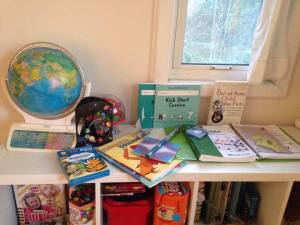
PGCABS flyerBring your questions about the CEO’s proposed operating budget for Fiscal Year 2017 to the Greenbelt Community Center (Rm. 114) on Monday, January 25th Thursday, February 4th at 6 pm. Staff from the PGCPS Budget Office will be in attendance to answer questions.
As you are preparing your questions, keep the following in mind:

  • Be sure that your questions are clear and to the point. This is not the time to make speeches about the virtues or failings of the budget. Save those comments for the Board of Education‘s budget hearing on February 9th.
  • Questions should pertain specifically to the operating budget. This meeting is not focused on school construction and renovation projects; capital improvements have a separate budget.
  • If possible, email your questions in advance of the meeting to pgcabschools@gmail.com or enter them into this google form.
  • Here is the link to CEO Maxwell’s proposed budget.

Have more questions about the event? Email us at pgcabschools@gmail.com.

Here is a link to the Facebook event page.

Why I Left PGCPS and Learned to Love Home Schooling

by Katy C.

homeschoolLast August, I withdrew my son from Prince George’s County Public Schools and began to home school him. This was a big step on many levels, impacting not only the environment of my child’s day-to-day life, but also my expectations for his future, our goals for his learning, and the financial security of my family. So why did I do this? From my perspective I had very little choice; it has turned out to be a very good decision.
My son’s elementary school treated him as a behavior problem that could not be solved. His behavior became more of a problem the more he struggled with his environment. He spent most of every day struggling with feeling overwhelmed. The school viewed him as extremely defiant and disorderly, but in fact he felt unsafe, overwhelmed, and incapable of learning. The message that he received from school is that he was a failure at learning and conforming. He became angry; his teachers became frustrated.

My son entered kindergarten in PGCPS with a recent diagnosis of a neurological processing issue. Although I brought the issue to the teacher’s attention before the first day of school, I waited until the end of kindergarten for a 504 plan.

The next year, things went downhill in terms of his behavior and learning. The school conducted a battery of tests, with some prompting from me subsequent to external visits to multiple doctors. The testing returned a wide variety of issues, including learning disabilities, sensory issues, processing problems, ADHD, and giftedness. After all of this, my son received an IEP in the last week of April his first grade year. He began to receive some supports for reading and behavior.

Great! Right?

I had some objections to the school’s approach, and I was told, “Don’t worry, let us try this. If it doesn’t work then we will adjust it.” So I trusted the school. I waited. When I got the notice for the next IEP meeting, the stated purpose was to review progress. That sounded right to me.

Continue reading

Time to Pay Attention to the School Budget

by Tommi Makila

It’s school budget time again. The CEO’s proposed operating budget for fiscal year 2017 is ambitious, so it is likely that we will again go through a spirited discussion about the school system and its funding level. So that your participatation in the discussion is more meaningful, I recommend doing the following three things:

1. Read the CEO’s proposed budget. The school system’s CEO presented his proposed operating budget to the Board of Education in early December. This proposed budget is available on the PGCPS website, on the Budget and Management Services webpage. Even if you don’t read the whole thing (the full document is over 300 pages), at least become familiar with the parts of the budget that interest you the most. Or read the introduction to the budget, a much shorter document that gives an overview of the budget.

2. Attend the budget Q&A session. Prince George’s County Advocates for Better Schools (PGCABS) is hosting a meeting so that interested residents can pose questions to the PGCPS budget office staff about the proposed budget. The Q&A session will be held on Monday, January 25 from 6 pm to 8 pm in Room 114 of the Greenbelt Community Center (15 Crescent Road, Greenbelt). To submit a question(s) in advance of the meeting, click here (or send an email to pgcabschools@gmail.com). Click here to submit questions about the budget . PGCPS budget staff will prepare answers in advance of the meeting. Emailed questions need to be submitted by Monday, January 18.

Continue reading

Weekly News Roundup: School Bus Violence, Science Bowl, Literacy Program

A cellphone video shows a sixth grader at Accokeek Academy being beaten on a school bus by other students (Fox32 and WTOP). The mother of one of the attackers claims that her daughter was acting in self-defense after being bullied, but the family of the alleged victim calls those claims “a complete farce” (Fox 5).

CEO Kevin Maxwell’s proposed $2 billion operating budget includes $43 million for teacher raises, $5 million for professional development and additional money for smaller class sizes, expanded prekindergarten, and math and literacy coaches. (Capital Gazette)

Prince George’s County’s science bowl for middle school and elementary school students is now in its 30th year. The Jeopardy-style competition is filmed in a professional television studio each fall and winter. Forty elementary schools and sixteen middle schools compete for spots in the final match-up which takes place in March. (Washington Post)

Hazel Ware, a fifteen-year-old senior at Flowers High School has been taking college classes since she was 13 years old and is currently enrolled at Prince George’s Community College through the Dual Enrollment program. She also founded the AP crusaders group at her school, a study program for students preparing for AP exams. (ABC7)

As part of PGCPS’s new literacy program, students at some high schools are analyzing articles and writing essays in all of their classes, including science and math. (Washington Post)

Continue reading

Weekly News Roundup: CEO Proposes $2 Billion Budget, ESSA Signed into Law

Schools CEO Kevin Maxwell gave his yearly state of the schools address on Thursday, outlining a proposed operating budget of $2 billion, a 9.9% increase in spending over the current year. Among Maxwell’s priorities are reducing class sizes in the early grades, raising teacher salaries, and expanding pre-kindergarten.  (Washington Post)

Find the full version of the CEO’s proposed fiscal year 2017 operating budget on the Department of Budget and Management Services’ webpage.

Three community meetings will be held next week to discuss possible school closings and boundary changes. The three community discussions will be held at Accokeek Academy (Monday, December 14), Northwestern High School (Tuesday, December 15), and Andrew Jackson Academy (Wednesday, December 16). All meetings begin at 6:30 pm.  (PGCPS)

Several families have spoken to the Washington Post about corporal punishment at Dora Kennedy French Immersion School in Greenbelt (Washington Post). In October, we published one parent’s account here.

The PARCC results are in for elementary and high school students. Among PGCPS students in grades 3-8, about 25% of students taking the English Language Arts/Literacy assessment and 15% of students taking the mathematics assessment received a score of 4 or 5. Performance is graded on a five-point scale, with a score of 4 indicating that the student “met expectations” and a score of 5 indicating that expectations were exceeded. Read stories at pgcps.org, the Washington Post, the Baltimore Sun, and on this blog. Find detailed results for every county and school in Maryland at the Maryland Report Card.

Continue reading

Prince George’s County PARCC Results Released for Elementary and Middle Schools

by Genevieve Demos Kelley

classroomThe elementary and middle school test results for the new Partnership for Assessment of Readiness for College and Careers (PARCC) in English Language Arts/ Literacy (ELA) and mathematics are now available on the Maryland State Department of Education’s Maryland Report Card. According to the PGCPS news release, home reports will be distributed next Monday.

Maryland is one of a shrinking number of states committed to using the new test, which was administered for the first time during the spring of the 2014-2015 school year.

Here are some key points from the data:

Fewer PGCPS Students Passed AP Exams in 2015

by Genevieve Demos Kelley

Earlier this year, we ran a story noting the six-year upward trend in Advanced Placement (AP) exam participation among students in Prince George’s County Schools. Between 2008 and 2014, participation in the AP program grew, while passing rates held steady. (Scores of three or higher, out of a possible five points, are considered passing.)

But according to numbers released on the 2015 Maryland Report Card, both the number of exams taken and the overall passing rate have declined slightly this year. Mathematics exams saw the biggest drop with a passing rate of 15.8% and 109 out of 692 exams receiving a passing score in 2015, compared with last year’s passing rate  of 19.1%, with 161 successful exams out of a total of 841 exams taken.

2008 2014 2015
AP Subject Description Exams with Scores 3-5/ Exams Taken
(%Exams w/ Scores 3-5)
Exams with Scores 3-5/ Exams Taken
(%Exams w/ Scores 3-5)
Exams with Scores 3-5/ Exams Taken
(%Exams w/ Scores 3-5)
All Subjects 2150/7829 (27.5%) 2606/9660 (27%) 2443/9452 (25.8%)
All Fine Arts 55/120 (45.8%) 130/267 (48.7%) 95/267 (35.6%)
All English Language Arts 593/2313 (25.6%) 623/2737 (22.8%) 625/2684 (23.3%)
All Foreign Language 191/301 (63.5%) 227/308  (73.7%) 183/251 (72.9%)
All Mathematics 180/753 (23.9%) 161/841  (19.1%) 109/692 (15.8%)
All Science 682/2341 (29.1%) 775/2791 (27.8%) 778/2616 (29.7%)
All Social Studies 449/2001 (22.4%) 690/2716 (25.4%) 618/2880 (21.5%)

Source: Maryland Report Card

These numbers don’t look good, but it’s not all bad news. Let’s take a closer look at the data and put the numbers in context:

Weekly News Roundup: No Child Left Behind Rewrite Passes House

Three community meetings to discuss boundary changes, school reassignment, and consolidation have been announced. Schools to be discussed include Accokeek Academy, Buck Lodge MS, Calverton ES, Forestville HS, Fort Washington Forest ES, G. James Gholson MS, Martin L. King Jr. MS, Potomac Landing ES, Princeton ES, Skyline ES, Suitland ES, Suitland HS, William Beanes ES. Reassigning sixth graders to middle schools will also be discussed. For dates and locations, see the flyer.

Dr. Henry A. Wise, Jr. High School won the Maryland 4A state football championship on Friday, defeating Howard High School 55-6 (Sentinel). Watch highlights of the game at Fox 5.

Side by Side, a faith-based nonprofit organization in Laurel, works with parents at five elementary schools to help parents learn how to help their children succeed in school. (Baltimore Sun)

A suspicious backpack with what looked like wires sticking out of it was found at Bladensburg High School after a bomb threat was called in to the school. An inspection showed that the backpack was harmless. (NBC 4)

Derrick Leon David (D-Mitchellville) and Danielle M. Glaros (D-Riverdale Park) were elected by the Prince George’s County Council as the new chair and vice chair, respectively. According to Davis, the council is “committed to creating a more business-friendly county.” (Washington Post)

A bipartisan rewrite of 2002’s much-criticized No Child Left Behind law, bill S. 1177,  easily passed the House on Wednesday and has moved on to the Senate for a vote early next week. The Every Student Succeeds Act (ESSA,) would give the federal government a smaller role in overseeing and guiding public education. The new legislation retains the requirement for annual testing in math and English and in grades 3 – 8 and once in high school. However, states would be able to make their own decisions about how to evaluate teachers and schools. (Washington Post)

Continue reading