Audit Could Answer Questions About Prince George’s Schools

From the Washington Post, by reporter Arelis R. Hernandez, published May 22, 2015.

For the complete story, go here.

Four years, two superintendents and one bruising state financial report after the Prince George’s County Council came up with the idea, officials are in the last stages of launching a comprehensive performance audit of the school system.

Council member Derrick Leon Davis (D-Mitchellville) sought an audit in 2011, under then-Superintendent William R. Hite Jr., after years of upheaval in school governance left many residents skeptical of how resources were being used.

Continue reading at the Washington Post.

PARCC Testing in a Prince George’s County High School

We’ve been hearing a lot lately about how today’s standardized testing schedules can impact student morale and classroom instruction. However, the problem goes deeper than just the individual student or even classroom. The following is one teacher’s account of how testing works at her local Prince George’s County High School. Individual schools may vary in how they schedule state-mandated exams.

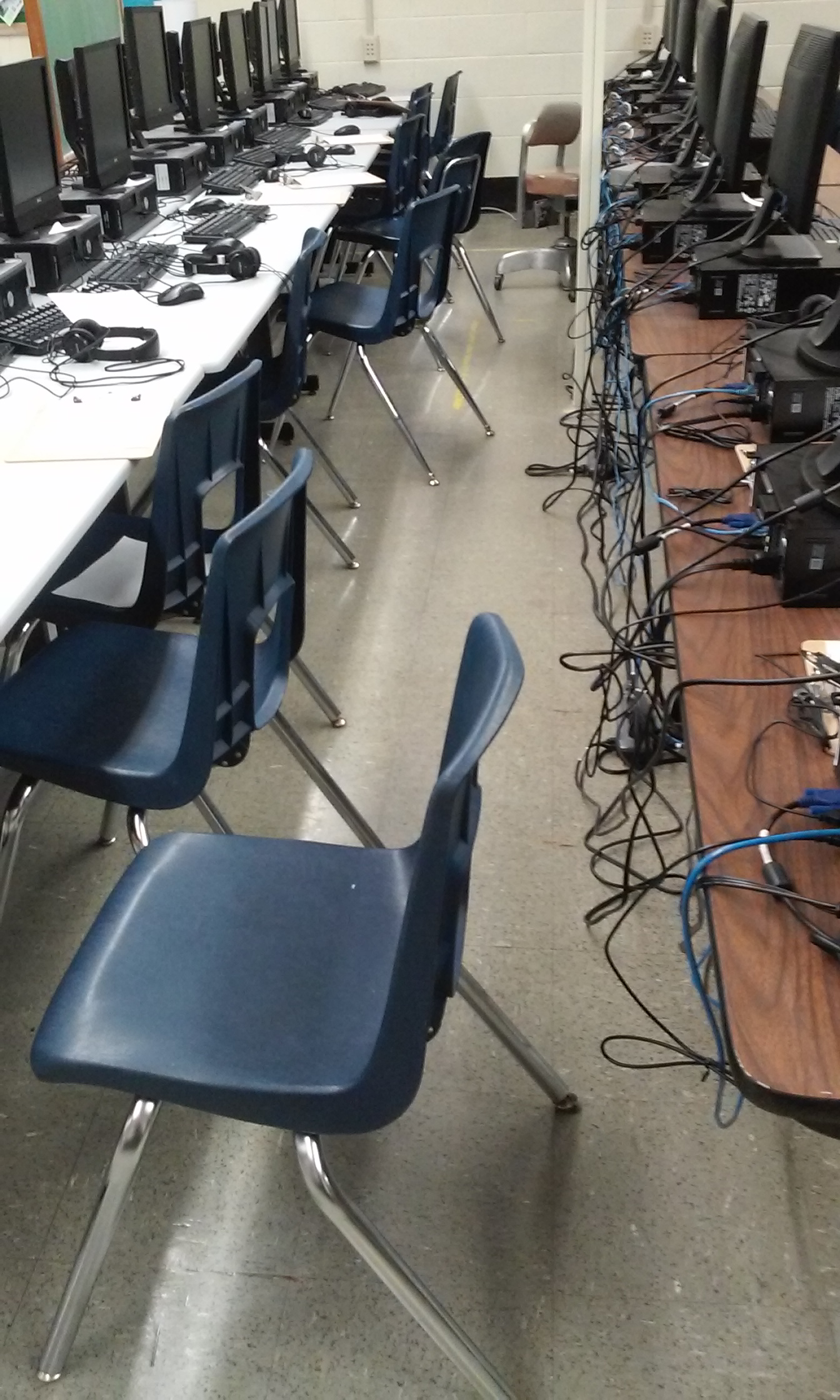
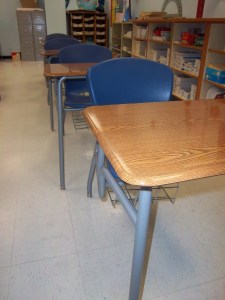
classroomTeaching schedules can affect many more students than just the ones being tested at any given time. Teachers can be assigned to tasks outside the classroom even while their students are not being tested. And because classrooms at the high school level are not necessarily segregated by grade, some students in a given class may be tested while others aren’t. During that time, a teacher has to determine the best way to make sure all her students are being presented with the same material.

Continue reading

Prince George’s Group Offers Support for Parents of Students with Health Needs

The support group Parents of Students with Health Needs recently held a listening session with board of education member Verjeana Jacobs and other PGCPS officials, so that parents could share their experiences.

The excerpt below is from the Gazette, reporter Jamie Anfenson-Comeau, published May 20, 2015.

For the complete story, go here.

Beth McCracken-Harness of Cheverly said that the three years her son spent in and out of school while being treated for a major illness were some of the most difficult experiences in her life.

“There was a time when I couldn’t go to the doctor right across the street without getting a call that my son’s heart monitor was going off,” McCracken-Harness recalled. “It was very isolating. Thank God for the Home and Hospitals teachers who came by.”

Continue reading at the Gazette.

PARCC States Vote to Shorten Test Time and Simplify Test Administration

An update from the PARCC website.
Washington, DC (May 21, 2015) — The PARCC Governing Board, made up of the state education commissioners and superintendents, voted Wednesday to consolidate the two testing windows into one and to reduce total test time by about 90 minutes beginning in the 2015-16 school year.  The vote came in response to school district and teacher feedback during the first year of testing and a careful review of the test design.

Maryland State Board of Education’s Newest Members Support Charters, Vouchers, High-Stakes Testing

by Genevieve Demos Kelley

Update on May 22, 2015: The post has been edited to reflect clarification received in response to a query about Bellwether Education Partners.
100_3383The Maryland State Department of Education has announced the appointment of two new members to the Maryland State Board of Education. Governor Hogan has selected Chester E. Finn, Jr., Ed.D. of Montgomery County and Andy Smarick of Queen Anne’s County to replace Charlene M. Dukes and Donna Hill Staton, whose terms ended last year.

Chester Finn is Chairman of the K-12 Education Task Force of Stanford University’s Hoover Institute. According to the Hoover Institute’s website, the Education Task Force promotes “systematic reform options such as vouchers, charter schools, and testing.” Click here to find analyses that Finn wrote for the Hoover Institute, generally avowing the importance of “results-based accountability” and testing. Finn is also President Emeritus of the Thomas B. Fordham Institute, a think tank with ties to the Gates Foundation that supports education reforms such as the Common Core State Standards, school choice, and accountability testing.

In January, Finn wrote an article for the New York Daily News praising Governor Cuomo’s education-reform agenda, calling it “awesome” and “union-unfriendly.” Cuomo’s agenda included “revamped (and tougher) teacher evaluations, more charters, a state-level version of the Dream Act,” but the item that Finn singles out for special attention is a tax-credit scholarship program for families to send their children to private schools. Praising the governor’s proposed voucher program, Finn writes that “school-choice advocates — and those who care more about the education of children than the interests of adults — should celebrate and applaud.”

Continue reading

PGCPS Policy Prohibits Use of Food or Recess as Punishment/Reward, Lunch Must Last 30 Minutes

by Amy Alford

Prince Georges’ County Public Schools has a policy on Wellness, Nutrition, and Physical Activity (Administrative Procedure 0116) that specifically prohibits the use of food, physical activity, recess, or physical education as a reward or punishment.

playground_6403.v01a.25percentThe policy also states that lunch must last at least 30 minutes, and principals must ensure that students have at least 20 minutes to eat. Additionally, it calls for principals to provide a cafeteria environment that is “pleasant and conducive to appropriate food consumption and socialization.”

It may surprise some parents that the policy requires that “all elementary children will have multiple opportunities daily for physical activity lasting 15 minutes or more, in addition to a daily recess period, preferably before lunch.” Earlier in the document, physical activity is defined as, “Any bodily movement produced by skeletal muscles those [sic] results in an expenditure of energy.”

Continue reading

A Dozen Years of Changes in PGCPS Governance Structure

by Amy Alford

Over the last dozen years, the PGCPS Board of Education has been structured in several different ways. Each time, the change occurred as the result of an act of the Maryland General Assembly.

The governance of PGCPS is unusual compared to school districts across the country. Nationwide, 90% of school districts are termed “Independent School Districts” which means that the elected school board has taxing authority. In Prince George’s County (and in Maryland in general), the school board depends on the county government to partially fund its budget (other money comes from the state and federal government). ([12])

In 2003, the elected board of education was replaced by a board appointed by the county executive (Wayne Curry at the time), and the governor. At the same time, the superintendent position was renamed the CEO, forcing Iris Metts, the superintendent at the time, to reapply for her job. ([1], [2]) She was rehired, but did not seek a new contract in 2003. The dissolution of the school board was in part caused by an attempt by the board to fire Metts. After Metts left, the appointed board hired Andre Hornsby, who resigned in 2005 during a federal investigation that ended with his conviction. ([3]). Howard Burnett served as acting CEO until John Deasy was hired in 2006.

Continue reading

Hogan to Withhold Extra Funding for High-Cost School Systems This Year; Baker Issues Reponse Statement

From the Washington Post, reporter John Hicks, published May 14, 2015. For the complete story, go here.

Maryland Gov. Larry Hogan announced Thursday that he will withhold $68 million in funding for high-cost school systems this year, thwarting the wishes of Democratic legislators and top officials in Montgomery and Prince George’s counties.

The General Assembly passed a measure in April requiring the state to fully fund a program that sends extra money to the state’s costliest school systems.

Continue reading at the Washington Post.

Click here to read County Executive Rushern Baker’s statement in response to Governor Hogan’s decision to withhold the funds.

Online Poll Shows Little Support for Property Tax Increase

by Genevieve Demos Kelley

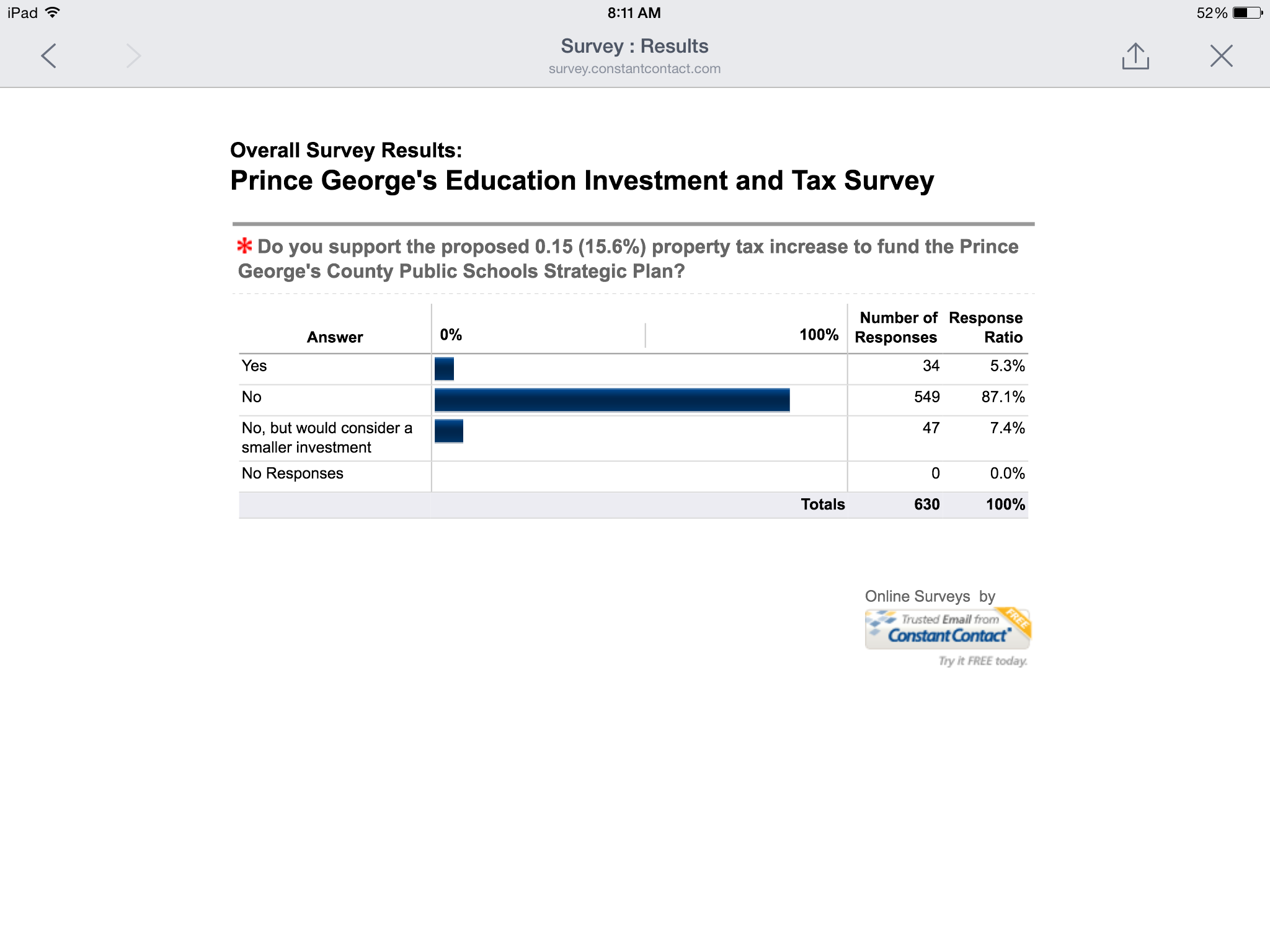
County Council Member Mel Franklin (Democrat, District 9, Council Chair) has invited residents to take a one-question, online poll regarding the proposed 15.6% property tax increase to fund Prince George’s County Public Schools. As of 8:11 am this morning, 549 out of 630 respondants answered that they opposed the proposed property tax increase. Only 5.3% of 630 respondants stated that they support the property tax increase outright, with 7.4% indicating that they would be willing to consider a smaller increase

While these numbers are certainly suggestive, we should be cautious about interpreting the survey results as representative of the views of county residents. Opponents of the tax increase have promoted the poll through social media and email. Hence the group of 630 respondants is far from being a random sample of voters; it is a self-selected group that may not accurately represent the opinions of voters in Prince Goerge’s County.

Screen capture of poll results.

Continue reading

The Post’s View: A Turnaround Plan for Prince George’s County

From the Washington Post editorial board, published May 6, 2015.

For the complete editorial piece, go here.

EVER SINCE he announced his audacious turnaround plan for Prince George’s County’s public schools — with 125,000 students, one of the nation’s 25 biggest systems — County Executive Rushern L. Baker III (D), until now one of Maryland’s most popular local officials, has become a political punching bag.

Yet none of his critics — neither the unhinged ones, who suggest Mr. Baker has ulterior motives, nor the calmer ones, who worry that taxpayers cannot afford sharply higher property taxes to raise teacher salaries and standards — has proposed an alternative to put the county’s struggling schools on a level playing field with the regional competition. Nor has anyone disagreed that doing so is essential to the county’s children and its future.

Read the whole story at the Washington Post.